jamie goode's wine blog

Monday, May 26, 2008

Two impressive Chileans

I used to be a bit of a Chile sceptic. Since my January visit, though, I've seen plenty of reasons for optimism about Chilean wine. Yes, there's still a bit of a problem with greenness in reds, and a bit more diversity and complexity in the higher-end wines would be welcomed. And I also think the country needs more boutique wineries, pushing the boundaries of quality on a small scale. But there's a dynamism to the current Chilean wine scene that suggests that in five years time, the picture will be a very different one.

Tonight two interesting wines, both from UK supermarket Marks & Spencer. Not perfect, but encouragingly good, and considering the prices, better than almost all other new world countries can do at this level.

Secano Pinot Noir 2007 Leyda Valley
Made for Marks & Spencer by Vina Leyda. This is a really vibrant Pinot Noir with lovely pure, sappy cherry and raspberry fruit, complemented by a subtle spicy, medicinal note that remains in the background. It's perhaps a little too green and herbal, but the fresh, bright fruit here has a lovely purity to it. It's a delightfully fresh wine that tastes like Pinot. Very primary, but quite joyful. 88/100 (£6.99 Marks & Spencer)

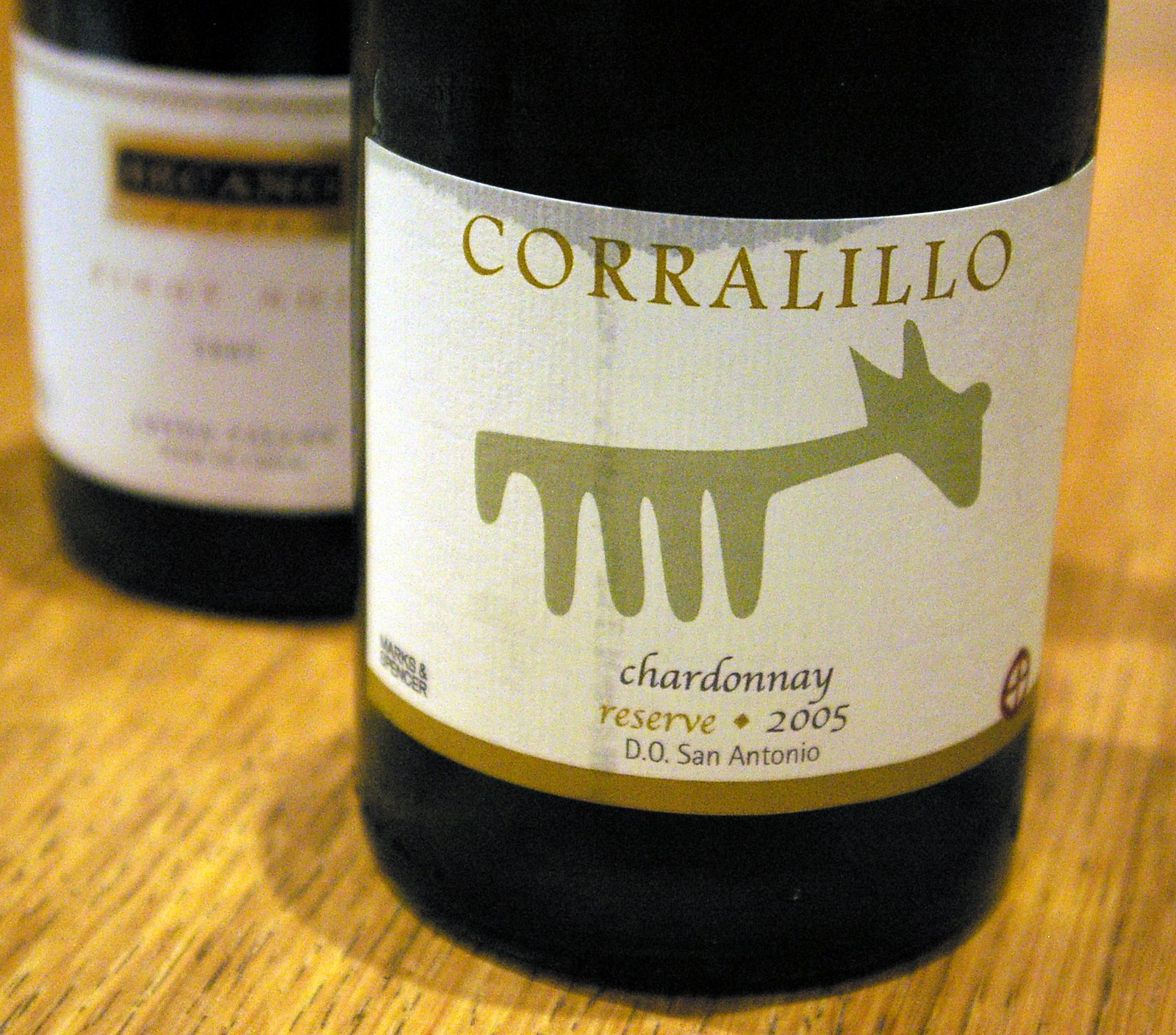
Corralillo Chardonnay Reserve 2005 San Antonio
This biodynamic white comes from Matetic, one of Chile's most exciting producers. It's almost overpowering, with intense flavours of nuts, vanilla, figs, citrus fruits and spice. Super-rich and very ripe, this wine almost has too much flavour for its own good. It really comes into its own with richly flavoured food, where the weight of the wine isn't quite so obvious. It would also work quite well with cheese. A big, complex Chardonnay for current drinking, and not for the timid. 90/100 (£9.99 Marks & Spencer)

Labels: , , ,

Sunday, March 30, 2008

Wines at home, from Argentina

Digging around on my sample racks recovered three Argentinean wines that I felt like trying. Two inexpensive reds were successful, offering great value for money. And a more expensive Chardonnay proved a fine match for a Spanish tortilla served with garlic prawns.

Aside: after a dismally damp day on Saturday, we had a taste of spring today. I spent a few luxurious hours pottering in the garden, doing some tidying up and planting. This year I'm determined that our garden should be pretty and productive.

Fuzion Shiraz Malbec 2007 Mendoza, Argentina
From Familia Zucchardi. Sweet, pure, ripe berry and black fruits dominate here, and there are some autumnal, foresty flavours, too. There's a hint of sweetness, but the dominant feature is the attractive pure fruit. Over-delivers for the price. Just 13% alcohol, too. 83/100 (£3.99 Somerfield)

Finca Flichman Reserva Shiraz 2006 Mendoza, Argentina
A dark, spicy, slightly meaty wine with lovely fruit intensity. This is joined by a subtle roast coffee edge, perhaps from the oak. There's some grippy structure on the palate which adds savouriness: I reckon this is a style best with food. Some substance here. 86/100 (£5.99 Waitrose, Stevens Garnier)
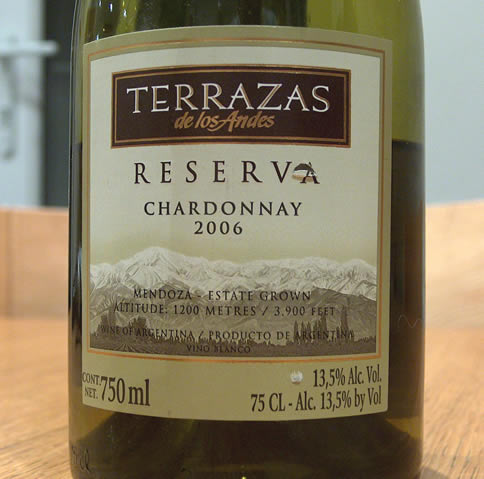
Terrazas Reserva Chardonnay 2006 Mendoza, Argentina
From high vineyards, at 1200 m altitude. This initially strikes me as very ripe, with tropical fruit, honey and vanilla to the fore. It's smooth, nutty and rich-textured, but there's also a brightness to the fruit, with some citrussy notes. It's a rounded, well integrated sort of wine of real appeal, although some might prefer their Chardonnays to have a bit more in the way of 'edges' and contrast between the various flavours. I like the way it is so 'together'. 89/100 (£10.99 Harvey Nichols)

Labels: , , ,

Monday, February 04, 2008

Wild Honey with Hannes Sabathi

I met with young Austrian winemaker Hannes Sabathi (pictured) today for lunch.

The venue was Wild Honey (newly Michelin starred) in St George Street. It's simply fantastic: some of the best food I've had in a long time - my slow-roasted pork belly, served with a remarkable risotto, containing chorizo among other things, was close to perfect. Hannes had a gorgeous looking medium-rare roast of veal. My creme brulee to finish with truly was perfect. The ambience is good too. The only thing that let it down a bit was the patchy service: at one point we were presented with someone else's desserts, and it took an age to see sight of the wines that Hannes had bought with him.

Indeed, the restaurant seemed very confused by the whole process of bringing wines along, even though this had been negotiated at the time of booking. In the end we got them, and remarkably they didn't charge us any corkage.

So, how were Hannes' wines? Not yet 28, and running the family winery, he seems to be doing a brilliant job. The winery is in Sudsteiermark (Southern Styria), which specializes in Sauvignon Blanc, Pinot Gris, Pinot Blanc, Chardonnay and Muskateller. The Klassik wines are precise and fresh, while the Single Vineyard wines have real personality and depth, allied to a minerally precision. There's also a reserve line, and the two Sauvignon Reserves I tried, 2003 and 2006, are among the best expressions of this grape I've yet to experience.

Labels: , , , , , ,

Thursday, January 10, 2008

Three Yalumba whites

Following on from the recent Pewsey Vale Riesling review, three more wines from Yalumba, whose offerings I usually like quite a bit.

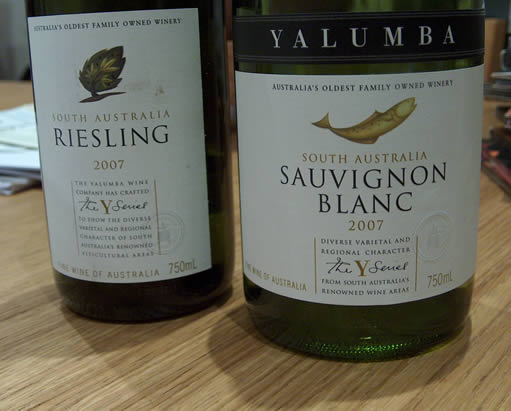
Yalumba Y Series Sauvignon Blanc 2007 South Australia
Fresh, pure, bright nose with subtly green herbal fruit. The palate is crisp and tight with nettley, herby fruit and a rounded, fruity finish. Quite a stylish effort that’s modern and commercial, but not too in-yer-face. Only 11% alcohol. 86/100

Yalumba Y Series Riesling 2007 South Australia
This is fresh, bright and fruity, with a crisp limey edge to the generous, slightly herb-tinged fruit. There’s a nice richness to the fruit here: it isn’t as bone dry tasting as some Aussie Rieslings, but I don’t think there’s much residual sugar – rather, the richness comes from some ripe fruit which adds a tropical edge to the limey zestiness. 87/100

Yalumba Y Series Unwooded Chardonnay 2007 South Australia
This is crisp and fresh, but with some nutty richness, too. But I’m not really sure about it. There’s a bit of a minerally reductive note on the nose and the palate seems a little hollow, finishing with some bitterness. I guess it’s OK, but I don’t enjoy it all that much. 80/100

Labels: , , ,

Wednesday, December 26, 2007

Some post-Christmas whites that work for me, baby!

Christmas has come and gone, and it was a very good one, Chez Goode. We've spent three days, now, doing the Christmas family thing of walks, meals, games, films and modest excess. I haven't blogged for a few days - I'd have been shot had I got my laptop out on Christmas day, and rightly so. [But I notice that Hugh at gaping void managed a Christmas day blog post, and typically thoughtful and insightful it is too.]

I wanted to take this chance to blog on two rather excellent, and very different, white wines. The first is an amazing dry Riesling; the second a seriously refined Australian Chardonnay.

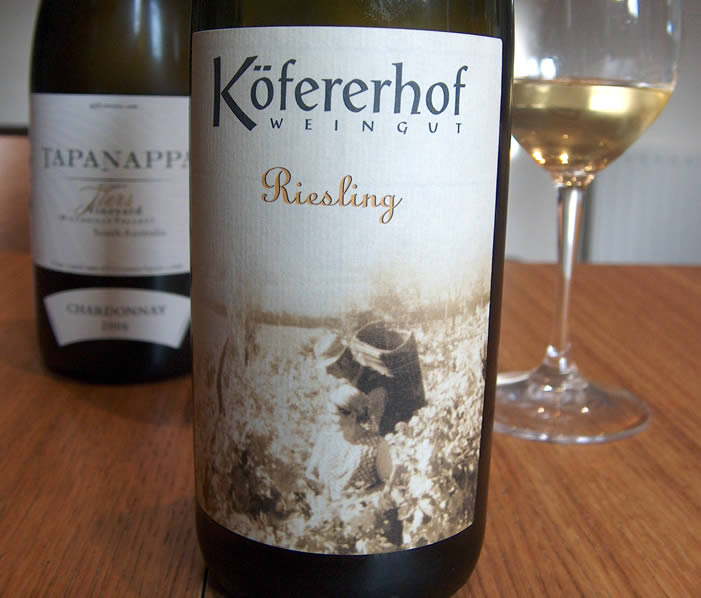
Kofererhof Riesling Brixner Eisacktaler 2005 Sudtirol, Italy
This mountain wine is technically Italian, but I guess it is probably more Austrian in character. It's a thrilling, intense dry Riesling showing stunning limey, floral aromatics. The palate is mineralic, intense, complex and limey with multidimensional fruit characters, a long, dry finish and bold acidity. I think it's utterly beautiful and quite profound, but with its rather extreme personality, some might find it a bit much. 93/100 (Les Caves de Pyrene £14.25)

Tapanappa 'Etages' Tiers Vineyard Chardonnay 2006 Piccadilly Valley, Adelaide Hills, Australia
Fermented in 70% new oak (Vosges) where it stays for 10 months, and from a cool, dry vintage. This is a concentrated, extremely elegant, ageworthy Australian Chardonnay of real poise. It shows tight, complex, wonderfully lean lemony fruit with some brilliantly integrated fresh vanilla oak. There's massive extract on the palate, which has some minerality, but it avoids being at all rich, fat, or sweet, which immediately sets it apart from most Aussie Chardonnays. This is a wine that will likely develop brilliantly over the next decade: it's starting from an intense, tight-wound platform, which makes it a slightly challenging drink now on its own, without food. I think it's quite profound, and justifies the high price tag. 94/100 (UK retail c. £30, more info from david@lindsay-may.co.uk)

Labels: , , ,

Thursday, December 06, 2007

Some Chilean whites from Errazuriz

You know, I reckon that Chilean whites work better for me than Chilean reds at the moment. After a strenuous but hugely enjoyable game of football tonight, played on the new synthetic surface that England played Russia on a while back, I'm trying three Chilean whites from Errazuriz. And they're pretty good.

Errazuriz Single Vineyard Sauvignon Blanc 2007 Casablanca Valley, Chile
This is sourced from a block on the La Escultura estate, planted in 1992 with clones 242, 107 and Davis 1. 20% of the fruit (all hand harvested) was given 6 hour maceration with skins. It's nicely aromatic, with a fresh, slightly herby nose that shows good freshness and minerality, along with more tropical fruit richness. The palate is quite rich textured with lovely fruit sweetness giving it a rounded character (yet there's only 1.39 g/l residual sugar), along with good acidity contributing freshness. There are notes of grapefruit and herb, too. It's quite a concentrated and moderately complex Sauvignon of real appeal. A great buy at this price. 90/100 (£9.95 Berry Bros & Rudd http://www.bbr.com/, http://www.chileanwineclub.co.uk/)

Erazzuriz Estate Sauvignon Blanc 2007 Casablanca Valley, Chile
Again, a portion of the fruit here (24%) was given a 6 hour maceration to add body and aromatics to the wine. The wine has quite a zesty, citrussy nose with some fresh green herby notes and a bit of fruit richness. The palate is refreshing and quite crisp, but there's an appealing richness to the fruit, and a rounded character, too. Good concentration here, in a style that falls somewhere between the in-yer-face Marlborough (NZ) style and the more savoury Loire expression of this grape variety. 88/100 (£6.49 Oddbins, £7.99 Thresher, but three for two)

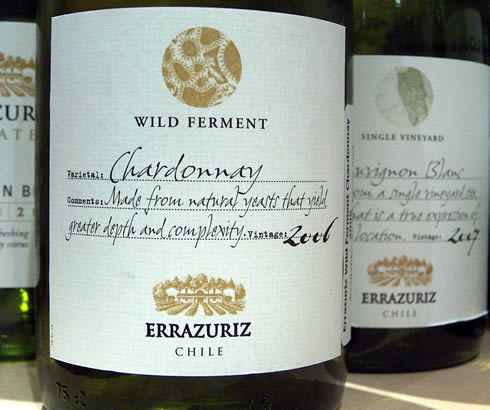
Errazuriz Estate Wild Ferment Chardonnay 2006 Casablanca Valley, Chile
I like the concept behind this wine. 'Wild Ferments' are those where cultured yeasts aren't added. What happens is that indigenous yeasts from the vineyard and winery environment begin the fermentation slowly, and then after a while the regular wine yeast, Saccharomyces cerevisiae, kicks in and finishes the job. Because of this, the wines that result (particularly the whites, in my experience) have added complexity of flavour, and a rather different mouthfeel. And here, with this Chardonnay, it works well. It has a warm, complex nose of butter, toast, herbs, vanilla and fruit spanning the spectrum from figs to lemons. The palate shows nice toasty complexity and nice fresh acidity, finishing long. Altogether, this is a thought-provoking, rich style of Chardonnay that may well improve with a couple of years in bottle. Good value for money. 90/100 (£9.99 Tesco; Sone, Vine and Sun; £11.95 Berry Bros & Rudd)

Labels: , ,

Monday, October 15, 2007

Interesting whites from the south of France

I love interesting wines. For me, the thrill of wine lies in its diversity, which is at least in part rooted in sense of place. But it's more than this: human choices, such as which grape varieties to grow, how to manage the vineyard, when to pick, and what to do in the winery all play a role in shaping the flavour of wine.

Two interesting wines tonight that rely heavily on human factors for their interesting personalities. Interestingly, the notes I wrote (a day apart) both finished with the same phrase; 'not for everyone'. I'm really glad people are making distinctive wines that will have enemies as well as friends.

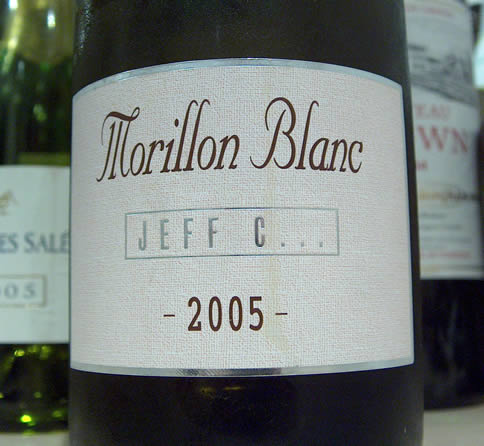
Jeff C... Morillon Blanc 2005 Vin de Pays de l'Aude, France
This unusual wine made by Jeff Carrel has a striking personality. From what I gather, the Chardonnay grapes used to make this wine (Morillon is another name for Chardonnay) have been fermented either with some botrytised grapes, or on the skins of botrytised grapes used to make a sweet wine. [Perhaps someone can help me out here?] The result is a deep yellow gold coloured wine with a powerful nose of nuts, honey, vanilla, lemons and apricots. The palate is richly textured with some marmalade tang adding bite to smooth, sweet-edged tropical fruit. There's a rich texture here, and some subtle oxidative notes. Not for everyone - it has almost too much flavour - but I really like it. 91/100 (£8.45 Averys)

Christophe Barbier Les Terres Salées 2005 Vin de Pays des Côtes de Perpignan, France
An old vine Bourboulenc, this is a real treat. There’s apple crumble and honey character, coupled with a touch of vanilla oak, but also some waxy savouriness and a lovely minerally, burnt match reductive note. Indeed, it’s the distinctive reductive character that really frames this wine, and suggests to me that it could age very nicely for five years to a decade. With its savoury complexity, it is not for everyone, but I really like it. 91/100 (£10.99 Averys – the 2004 is £15 in Waitrose)

Labels: , ,

Saturday, September 01, 2007

Chardonnay, Shiraz and Airfix

It's been an easy family day here chez Goode. And we don't have all that many of those. On this blog, I'm probably guilty of painting a picture of domestic bliss. But, like many families, I suspect, we have lots of struggles. [Indeed, one of the reasons why we probably have so many, and also one of the reasons why I don't post pictures of my children here, or name them, is because they are both adopted.] It's probably because of all the struggles that the times where we function as a normal family are all the sweeter. You've no idea how much pleasure a day out without serious conflict can bring us...

Having said this, things have been good of late. Since our day at Duxford, reported below, the boys have been crazy about Airfix models models. As someone who grew up on airfix models, I'm very pleased about this, and I've been happy to assist them, bathing in a warm glow of nostalgia as I sniff the heady aroma of enamel paint, polystyrene cement and white spirits. In this age of the playstation (I'm not knocking it - how we would have loved to have a playstation in our day - it would have killed a lot of boredom), doing something physical like assembling model kits has a sort of moral premium over the virtual world of electronic gaming.

The boys are currently working hard on various projects, including a Gnat, a Stuker, a Hawker Hunter, an M24 tank and a forward command post (whatever that is). A little militaristic, I agree, but then I did spend most of my childhood immersed in guns, tanks, planes and battleships without turning out to be at all violent (except on the football pitch). I think you grow up to realize the waste, sadness and tragedy of war - but you can still admire the Spitfire, Lancaster and B29 as fine aeroplanes.

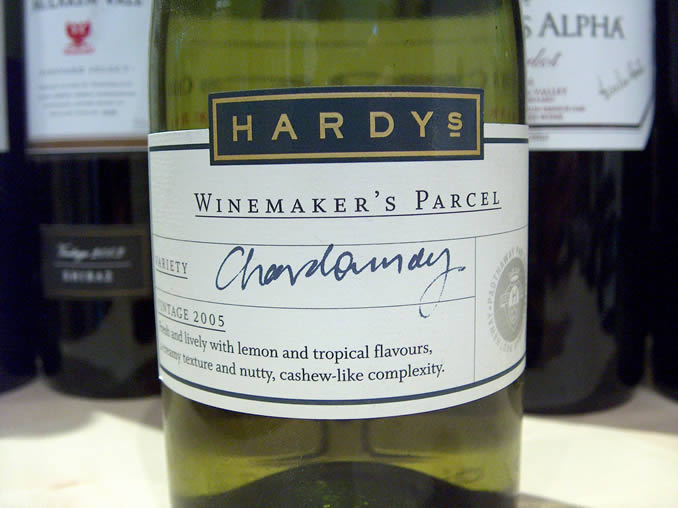
Back to wine. Two Aussies tonight. The first, which is pictured, took me by surprise a little. I was expecting Hardy's Winemaker's Parcel Chardonnay 2005 to be commercial crap. But when I tasted it, I was really impressed by its balance. Then I looked more carefully at the label: it's from Padthaway, in South Australia. The terroir is the difference: in this case, red/brown loam over limestone, and a relatively cool climate. A great region for Chardonnay, and the soil has made this wine, which shows nice nuttiness, really good fruit, and a hint of almost Burgundian cabbagey reduction, which adds complexity. The big company, Hardy's, has done well here - this is a really nice Chardonnay.

The second wine is another which shows the benefit of a really good vineyard site. The vineyard in question? Jim Barry's Lodge Hill in the Clare Valley, and its the 2005 Shiraz. From several recent experiences, I'm beginning to think that the Clare Valley is a special place for red wine. Note follows:

Jim Barry The Lodge Hill Shiraz 2005 Clare Valley
(Natural cork closure) Very deep coloured. Wonderful fruit purity here, despite the 15% alcohol which means that in the EU this wine has to be labelled 'special late harvested'. Ripe, sweet nose with lovely lush red and black fruits, but it's still alive and fresh. Not at all dead. The palate has pure, vivid spicy fruit with lovely focus, backed up by some tannic structure that keeps it savoury. There's a bit of alcoholic heat here, adding sweetness and bitterness at the same time, but that's my only negative on what is a lovely, intense, fruit-driven wine. 92/100

Labels: , , ,

Monday, July 16, 2007

The world's best Chardonnay?

The title is somewhat misleading; it's meant to be provocative, but there's a more serious side to this question. Perhaps I should have re-titled it 'the world's most important Chardonnay'. This wine is significant.

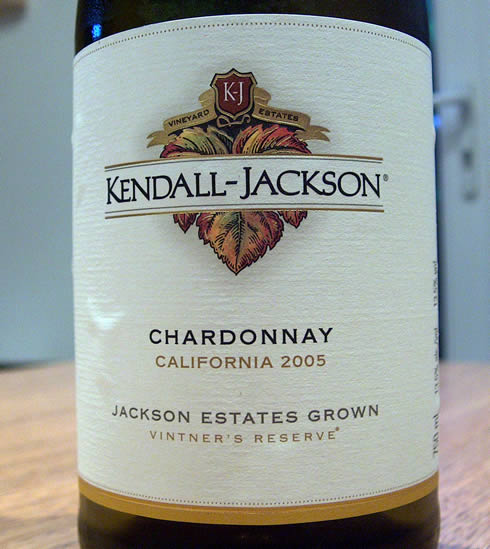
Tonight, I'm drinking Kendall Jackson's Vintner's Reserve Chardonnay (which I'll abbreviate as KJVRC) 2005, which is an interesting wine, and not just because of the liquid in the bottle. I wrote a little about Kendall Jackson here on this blog a few weeks ago. They're an important player in the premium Californian wine scene, owning about 25 different estates and pumping out between 3.5 and 4.5 million cases per year all from estate-grown fruit.

The KJVRC was first made in 1982. It was an instant hit, and was the driving force behind the establishment of KJ as one of California's top wine estates. The secret to its success was that (1) it was based on good quality fruit from Sonoma Coast; (2) the wine was attractively priced considering the quality; and (3) there was a good dollop of residual sugar, together with a hint of botrytis.

It's the residual sugar that has been the 'story' that's most often brought up in connection with this wine. Basically, the first time it was made, some sweet, low alcohol Chardonnay - the result of a stuck fermentation - was later blended back into the main batch of wine (presumably after sterile filtering), resulting in a final wine with some sweetness. But it's clear that this was one of the reasons why this wine resonated with consumers, and is now a staggering 1 million case production.

I'm sure that KJ are fed up with questions about the residual sugar level of the KJVRC. At a recent press tasting, the technical fiches didn't mention it, and the suggestion was that it is now much lower than it used to be. Interestingly, residual sugar is the key to the success of a number of branded wines. Increasingly, commercial reds are being sweetened by as much as 9 grams/litre residual sugar, most commonly added post ferment as grape juice concentrate.

KJ winemaker Jed Steele left in 1991 and in 1992 was subject to legal action by his former employers. KJ weren't happy that he took with him the secret of the success of KJVRC (see this contemporary news article). I quote:
"In a milestone ruling for the wine industry, a county court in California has ruled that a winemaking process constitutes a trade secret belonging to a winery and may not be divulged by the winemaker to subsequent employers or consulting clients."

It's a ruling that upset the industry. There are only so many ways to make wine, and most of them have been practised for generations. If you are a winemaker who leaves a previous winery, legal shackles preventing you from using the techniques you utlized in your previous employment could effectively finish your career.

So what is the wine like? First, let's judge this in context. In the USA it sells for $13, but loads of places have it for just a few cents under $10. That's a fiver over here. At this price, it's a no-brainer. In the UK, retail is £8.99 through Morrisons, which puts it into a slightly different bracket, although it can certainly compete at this price level.

My first impression is of richness allied with freshness. There's some spicy peach, apricot and fig richness, coupled with fruit sweetness, but offset by good acidity and a citrussy focus. I'm getting a hint of grapefruit, too, on the finish. The sweetness here is alluring - I'm not sure how much is due to the fruitiness or whether this is a wine that still has a bit of residual sugar in the mix. If it wasn't for some of the more distinctive Chardonnay (fig, tropical fruit) characters and the subtle oak, the texture here - with sweetness offset by acidity - would lead me in the direction of a Riesling Kabinett from the Mosel. If points mean anything to you, I'd give this 88/100. Given the quantities made, the low price, the impact this wine has had, and the market penetration, this is one of the world's most important Chardonnays.

One further historical note. In the mid-1990s Gallo launched their 'Turning Leaf' range, including a Chardonnay. The logo for Turning Leaf has a picture of a vine leaf in its autumn colours, an image that appears (to my eye) to be somewhat similar to the autumnal vine leaf that's the visual hook for the KJVRC label. KJ sued Gallo about this and lost. Twice (once on appeal). Interestingly, one of my editors recently asked me a question about the 'Kendall Jackson Turning Leaf Chardonnay'.

Labels: , ,

Monday, June 25, 2007

Barbara Banke and Jackson Wine Estates

Had lunch with Barbara Banke of Jackson Wine Estates today. Barbara, wife of Jess Jackson (who pulled out of the gig because of negotiations surrounding a race horse, his new hobby), is fully involved in running Jackson Wine Estates, and communicated the story behind Kendall Jackson very effectively. As usual, I'll write up the interview and tasting in full soon, but here's a taster.

Kendall-Jackson began life 25 years ago as a leisure pursuit. 'Jess and I started the winery for relaxation', says Banke – they were both busy attorneys whose work was driving them a bit crazy. 'We bought a small property in Lake County and were going to sell the grapes', she recalls, but when selling the grapes proved tricky in 1982 they decided to make some wine.

The first wine was from eight cool climate coastal Chardonnay vineyards, and when the ferment of one of these stuck, the wine was blended in with the rest to create a slightly sweet Chardonnay that American consumers just loved: it got written up well and sold out in six weeks. KJ decided to stick with this style – a Chardonnay with a little residual sugar, and it proved to be a winning formula.

Of course, the high residual sugar style of Chardonnay isn't universally acclaimed, and you get the distinct impression that to this day KJ squirm a bit whenever the term 'residual sugar' is uttered by journalists. The current Chardonnay is made in a less sweet style, but there's still some residual sugar there, although no one I asked seemed to know how much, and the technical fiches don't disclose it.

The success of the Vintner's Reserve Chardonnay was the beginning of a steady growth, to the extent that KJ are now one of the largest players in the Californian wine scene.

But KJ have taken their business in a direction that's rather different from that of the rest of the wine industry. They are a big producer – depending on who you listen to they make between 3.5 and 4.5 million cases of wine each year – yet they make everything from estate-grown fruit. This contrasts strongly from the current situation where large publically listed wine companies divest themselves of capital-hungry assets such as vineyards in the quest for a better return on investment.
No short-cuts are taken in the winemaking: the Vintners Reserve Chardonnay, their big seller, is 80% barrel fermented, and no oak chips or staves are used. To satisfy their huge demand for barrels, for the last 10 years they have owned a stave mill in the Vosges forest of France.

Not only have vineyards been acquired – the current total stands at around 14 000 acres – but Jess and Barbara have also been buying up wine estates. They own 25 of them, mainly in California, but also stretching to Europe, Australia and South America. 'Essentially, we are collectors of these little vineyards', says Banke.
With lunch we tried several wines. The KJ Vintner's Reserve Chardonnay 2005, which retails at $12-15 in the USA, impresses, with plenty of weight allied with some freshness. It's unashamedly Californian in style. The Grand Reserve Chardonnay 2004 hails from Santa Barbara, and is a bit weightier and richer, with toasty complexity – nice stuff in a full flavoured style. A Hawkeye Mountain Cabernet Sauvignon 2003 comes from a mountain vineyard in the Alexander Valley of Sonoma, and has lovely savoury, tannic structure supporting vivid fruit. This really impressed. The 1999 Stature Cabernet Sauvignon from Mount Veeder in Napa was supremely elegant and ageing very nicely. Serious stuff. La Crema Pinot Noir 2005 from Carneros is fresh and cherryish with nice expressive fruit, while the Hartford Court Land's Edge Pinot Noir 2005 from a subregion of the Russian River Valley is a step up, with lovely clarity of pure red fruits – it should age well. Verite La Muse 2002 is Jess and Barbara's wannabe Petrus, and this is a serious effort: the Merlot-dominated blend from Sonoma County has clarity, focus and a nice mineral core. Not a heavy wine at all. Moving to St Emilion, the Chateau Lassegue 2003 is a wine that has overcome its vintage handicap and is actually pretty elegant and fresh, although the tannins do clamp down a bit hard on the finish. Finally, the Lokoya 2003 Diamond Mountain Cabernet is in a different style altogether. It's big, with 14.9% alcohol and lots of fruit, but the fruit never runs away with the wine: it is held in check by lovely spicy minerality. Pretty serious stuff in this forward style, and it should age well. Quite a portfolio.

Labels: , , ,

Monday, June 18, 2007

Chablis times two

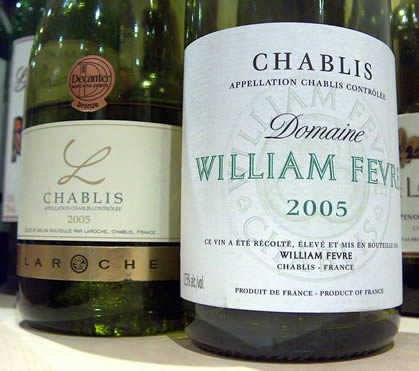
A couple of Chablis to compare, Laroche 2005 and William Fevre 2005 (this will be priced at £8.99 in Bibendum's forthcoming sale, which starts on July 3rd).

Both taste like Chablis: that is they have fresh, bright fruit with a distinctive minerality lurking around somewhere in the background, and they also have a savoury nature to them. They don't taste like unoaked Chardonnays (which is what they effectively are, but which isn't the point of Chablis).

The Laroche is a bit smoother and broader than the slightly edgy Fevre. The Fevre has some citrus pith character; the Laroche has a touch of what I describe as 'straw'. Both are versatile food wines. The Fevre is sealed with natural cork, the Laroche with a screwcap (although the liner used here is saranex, without the common metal layer which allows much less oxygen transmission - it's a wise move for this sort of wine, because you have to be on your guard using a tin liner otherwise you can run into reduction problems).

Both these wines are good examples of Chablis and, while they're not going to blow your socks off, they're extremely tasty and versatile. Fevre just has the edge for me. The Laroche is available as part of a Laroche mixed case from Tesco, or from Sainsbury at £8.99.

Labels: , ,

Tuesday, June 05, 2007

Hitting the Chardonnay trail, once again


Two more Chardonnays. A while back I was doing a mini-series here on the blog on this grape; I guess it's back.

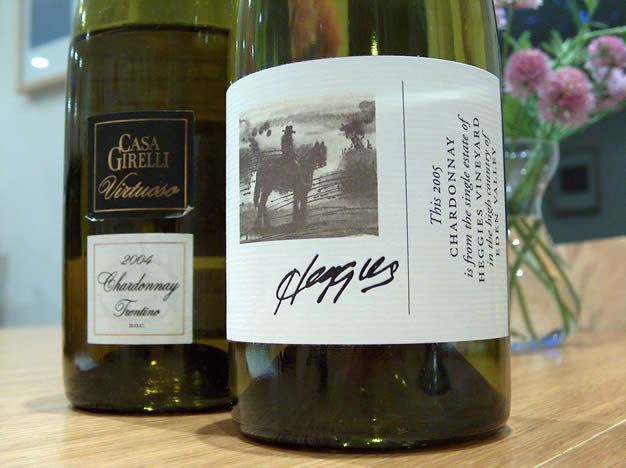
Casa Girelli Virtuoso Chardonnay 2004 Trentino, Italy
13% alcohol, extruded synthetic closure. Deep gold colour, which is a bit off-putting, but then we're talking Italy here, and up in the north they like to give their whites a bit of skin contact. Unusual nose: there's some lemony freshness, but also some more intense - severe, almost - savoury, toasty nose that's showing some complexity. There's a bit of herb, too. Fruity, fresh, but deep, rich, toasty and nutty on the palate. A bit grapey. An unusual but strangely satisfying wine that won't be to everyone's taste. Drink young. Very good+ 87/100 (£7.99 D Byrne, Wine Times)

Heggies Vineyard Chardonnay 2005 Eden Valley, Australia
Close planted Bernard clones grown at an altitude of 550 metres. Hand picked, gently pressed, wild ferment in French oak. 14% alcohol, tin-lined screwcap closure. This has quite a delicate nose (for an Aussie Chardonnay, at any rate), showing fresh, complex spicy, lemony fruit with a fine creamy and delicately bready edge. The palate is quite light - almost transparent - with a fine toastiness adding richness to the nicely phrased lemon, pear and vanilla flavours that work well together. I hate to use the term 'Burgundian', but that's where this wine is headed, although the cleanness and alcoholic depth might have given its new world origins away. But this really is a sophisticated, understated effort. Very good/excellent 92/100

Labels: , ,

Tuesday, March 13, 2007

Cloudy Bay, located

Was recently sent a bottle of the 2004 Cloudy Bay Chardonnay, along with information about a new service, cloudybaylocator.com. So I try both out, beginning with the website.

We start off with one of those annoying age verification screens, beloved of the legal departments of large drinks companies. How daft they are. If you are an underrage drinker, why would you want to find information about the nearest restaurant to you that sells Cloudy Bay? Would reading about wine suddenly whip you into a fervour such that you hang outside wine shops begging people to go in and buy you a £15 Sauvignon Blanc?

So I type in a DOB that makes me 14. I get greeted with the message, 'sorry you are not old enough to end this site'. 'End this site'? IT contractors aren't what they used to be. So I type in a DOB that makes me 560 years old. Straight in.

My closest restaurant serving Cloudy Bay? Incredibly, it's 11 miles away - Ransome's Dock - a fine restaurant, but I'm amazed there's not one closer. That means no restaurant in Richmond, Twickenham, Hampton, Chiswick, Kew or Putney stocks Cloudy Bay. Or perhaps it means that some do, but they are unable to offer an electronic booking service. If you click on the restaurant's name, then you can reserve your bottle of Cloudy Bay, be it the zippy Sauvignon, the bold Chardonnay, the focused Pinot Noir or the rather sexy Te Koko along with your table reservation. That's a smart idea.

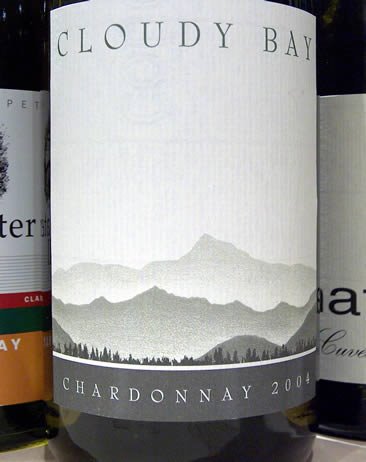
Cloudy Bay Chardonnay 2004 Marlborough, New Zealand
This is the ultimate new world Chardonnay. There's lots of everything, and if you are in the mood for it, it's a compelling glassfull. The nose shows rich tropical fruit combining with some spice, a bit of smoke and some vanilla oak. Indeed, there's a hint of malt whisky on the nose. The palate is bold and full, with tangy, herby tropical fruit, a bit of citrussy zest, spicy complexity and some sweetness from the alcohol. It's concentrated and powerful, with the oak playing a supporting role rather than grabbing central stage. With boldly flavoured food, this is a winner. Very good/excellent 92/100

Labels: ,

Wednesday, February 28, 2007

A dodgy Chardonnay, and a nice one

Two more Chardon-
nays, one bad, one good value.
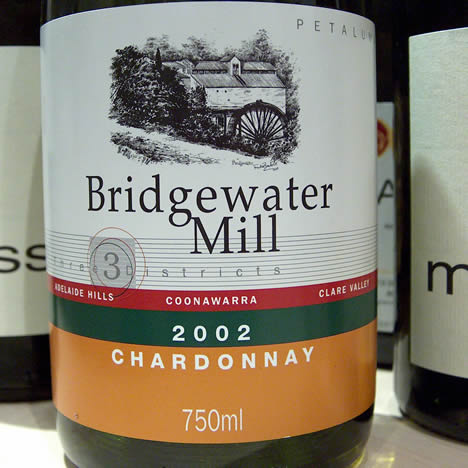
Bridgewater Mill Chardonnay 2002 South Australia
Combining fruit from Petaluma’s vineyards in the Adelaide Hills, Coonawarra and Clare Valley, this is a Chardonnay that has seen better days. Beautiful quality cork, though. A full yellow colour, it has a rather off-putting nose that combines buttery richness with a tinned pea/herbal character. The palate is equally uninviting, with some disjointed alcohol, bitter herbs and the beginnings of an oxidative honeyed and appley character. It’s not undrinkable by any stretch of the imagination - I mean, it won't kill you, and it has some alcohol to numb the pain - but it doesn’t offer pleasure, and should have been drunk a few years ago. OK 74/100 (in the Bibendum sale, http://www.bibendum.co.uk/, but even at £4.28 this is a pass)

Marks & Spencer Hunter Valley Chardonnay 2006 Australia
I really like this Hunter Chardonnay, which is made by Twin Wells. It combines the usual toasty, spicy, buttery richness of Chardonnay with a delightful citrussy freshness and a subtle warm herbiness. The oak is well in the background, and there’s a pronounced mineralic twang. The only slight negative is a subtle bitter character to the fruit on the finish, but this doesn’t detract too much from what’s a delicious wine. 13% alcohol. Very good+ 89/100 (£7.99 on offer at £5.99 7 March–9 April 2007, Marks & Spencer)

Labels: ,

Tuesday, January 09, 2007

when the points don't work...more Chardonnay

Scoring wines with points shouldn't be taken too seriously. It's quite a useful shorthand for saying how much you like a wine - and in this sense, people who choose not to use points neatly avoid putting their necks on the line, because you can read a written description any number of ways.

But despite their utility, points fail in some circumstances. They convey no information about style and character - or about the sort of context where a particular wine might perform very well or badly.

Two Chardonnays that have recently passed my lips are good examples of wines where points aren't up to much. One is a big, fat Californian; the other, a remarkably intense Slovenian. Both could be enjoyed or hated, depending on the occasion and personal preference - information not contained in a score.

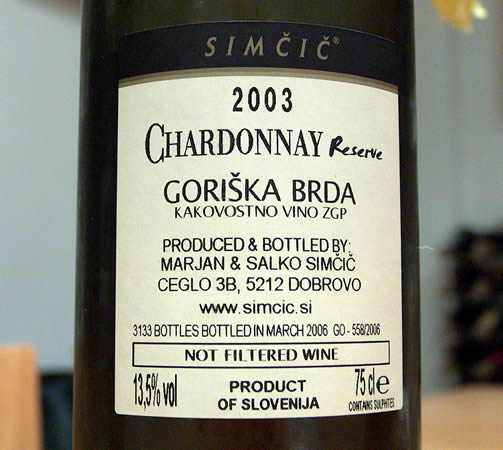
Simcic Chardonnay Réserve 2003 Goriška, Brda, Slovenia
3133 bottles produced in March 2006; this spends 7–8 days in contact with the skins. A deep yellow/gold colour it has a really interesting nose. It’s quite tight with some herbal fruit married with bakery smells and vanilla oak, but there’s also a savoury, slightly oily complexity here. The palate is dense, a little tannic even, with a heavy toasty oak imprint and sweet, bready, herby fruit. It’s a full-on Chardonnay of great intensity and concentration – no doubt a bit too full on for some. I like it, though. Very good/excellent 90/100 (H&H Bancroft) 01/07

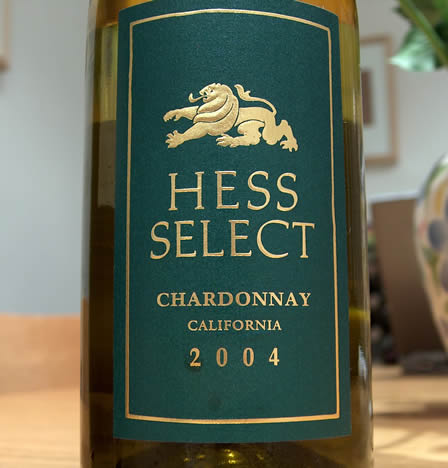
Hess Select Chardonnay 2004 California
A fat, buttery Californian Chardonnay that’s rich and broad with thick tropical and figgy fruit. There’s also some sweet vanillin butteriness. It’s a seductive, immediate sort of wine whose obvious charms tire a little quickly, but if you like fat Chardonnays you’ll love this. Very good+ 85/100 (£8.49 Wine Society. Oxford Wine, D Byrne, Handford)

Labels: , , ,

Thursday, December 28, 2006

More Chardonnay

Had a great day. We met up with some good friends and their kids at Box Hill for a hearty walk, followed by lunch at the Abinger Hatch in Abinger Common. The London Pride was tasting good today.

No adverse effects from yesterday's modest indulgence, so it was back to wine tasting this evening with a vengence. Among the wines sampled, a really impressive unoaked Californian Chardonnay (I didn't know that California did unoaked Chardonnay, but clearly it exists).


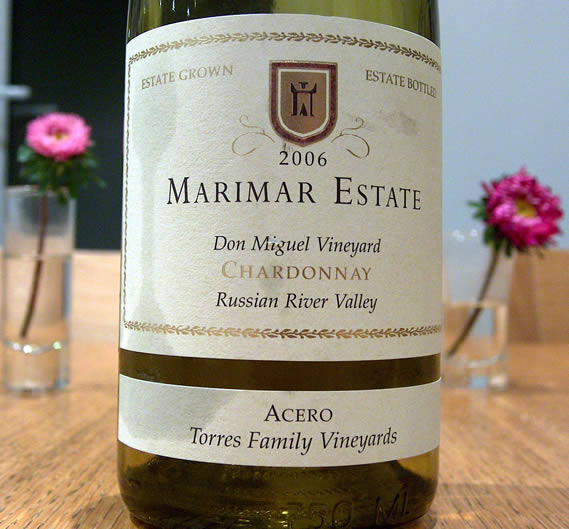
Marimar Estate Don Miguel Vineyard Acero Chardonnay 2005 Russian River Valley, California
Aromatic and fruity, this well balanced Chardonnay shows quite rich tropical fruit/pineapple notes countered nicely by some lemony acidity. There's plenty of richness, but it's not at all overdone: balance is maintained. Unoaked, and probably better for it. The alcohol level, at 13.5%, is pretty sane for a Californian Chardonnay, too, which suggests that they got the balance right on the vine. I like this. Very good/excellent 90/100

Labels: ,

Monday, December 18, 2006

Chardonnay...again

Wine again. This remains predominantly a wine blog, despite recent evidence to the contrary. Two more data points from the Chardonnay trail, this time from France and Chile.

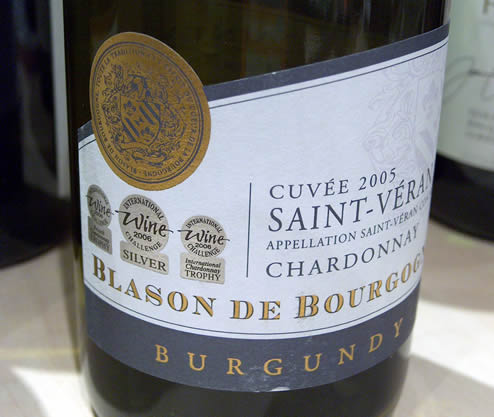
Blason de Bourgogne Chardonnay 2005 Saint-Veran, Burgundy, France
This medal-encrusted wine (it won three gongs at the 2006 International Wine Challenge) is interesting, in that it represents the new face of inexpensive white Burgundy: the word 'Chardonnay' appears on the label alongside the appellation. It's quite rich, broad and nutty on the nose, with a warm, almost Autumnal edge. The palate is quite savoury and full, with a spicy, nutty character. Full flavoured and for drinking now, before the slightly oxidative side to the fruit becomes dominant. Very good+ 86/100 (This is, I think, around £7.99 retail, but is frequently on price promotion for £5.99, at which point it becomes competitive.)

Leyda Single Vineyard 'Falaris Hill Vineyard' Chardonnay 2005 Leyda Valley, Chile
While my enthusiasm for Chile's reds remains largely nascent, I'm being won over by many Chilean whites. The Leyda wines, in particular, have really impressed. This single-vineyard Chardonnay is brilliant. It begins with a powerful, opulent nose of tropical fruit, spice, herbs, some toasty oak and a hint of fudge. The palate is full with rich apricotty fruit and spice, almost like a dry Sauternes. It's a complex, expressive, intense new world Chardonnay. Very good/excellent 91/100 (Great Western Wines are the UK importers).

Labels: , ,

Thursday, December 14, 2006

Another Chardonnay

Next stop in the Chardonnay trail is California. The more commercial Californian wines are often dire, but Brown Forman's Bonterra brand is one I've been quite impressed with, even though they've seemed to milk the organic thing rather too much. I really quite liked this latest release of their Chardonnay.

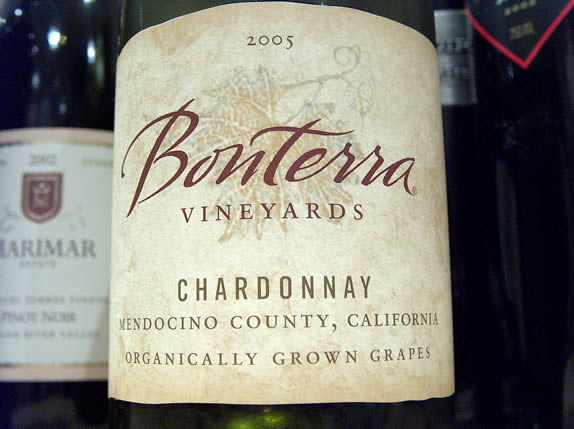
Bonterra Vineyards Chardonnay 2005 Mendocino, California
Lots of flavour here, but it's not overdone: I'm getting baked apples, pears and a hint of lemony freshness, together with some spicy, toasty oak which adds richness. Quite broad shouldered, but not as fat as I remember previous releases being. Very good+ 88/100 (Waitrose £8.99 although I think it is currently on promotion at a bit less)

Labels: , ,

Sunday, November 26, 2006

Chardonnay trail again

Another data point for the Chardonnay trail, an unofficial series of notes on examples of this variety that have been accumulating on my blog in recent weeks.

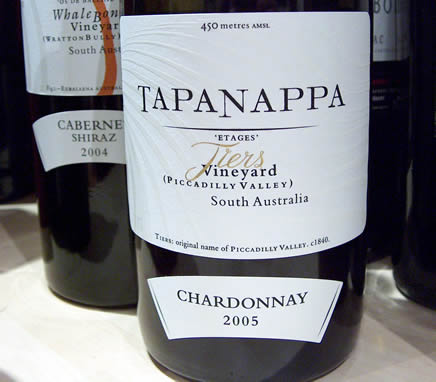
This time it's off to Australia - the Piccadilly Valley of South Australia, to be precise. This one's from a famous vineyard, but it's a new wine. It's the first release of the Tapanappa Chardonnay (2005), which comes from Brian Croser's Tiers vineyard (pictured), which until this year was used to make Petaluma Chardonnay (and in more recent years the single-vineyard Tiers bottling). I can't think of many (if any) better Chardonnays from Australia. It's boldly flavoured but not at all fat, with a lovely minerally complexity. The oak is well integrated and there is huge potential for development. It's a wine you can drink now, but rarely for Australian Chardonnay this will likely improve over the next 5-7 years, rather than just survive, and if I had a few bottles of this I'd not be tempted to crack them too early. As an aside, the label design is lovely, and the cork is physically perfect - it's one of the best looking corks I've ever seen. 450 cases made, around £40 retail (an educated guess).

Note added later: my £40 estimate was based on the retail price of the Petaluma Tiers Vineyard Chardonnayretail is £29.95, from Noel Young Wines, Avery’s, Fine & Rare, The Secret Cellar (Tunbridge Wells), Edencroft Wines (Nantwich), Harrods

Labels: ,

Tuesday, November 21, 2006

Back on the Chardonnay trail

It's been a while since I reported from the Chardonnay trail. Here's another one - and I was quite impressed by it. It's from Amayna in Chile's Leyda Valley, and is the sister wine of the impressive Sauvignon I reported on a few days ago. It's big and bold with masses of concentrated fruit that's at the same time fat and fresh. Unmistakably new world, but complex and elegant with it. 14.5% alcohol and 92 points (in my book). Ambitiously priced for a Chilean Chardonnay at £16.49, but probably just about worth it.

Labels: ,