wa2.gif (4241 bytes)

abut9.gif (3095 bytes)


abut12.gif (3207 bytes)
abut10.gif (3636 bytes)


abut11.gif (4039 bytes)


Abou

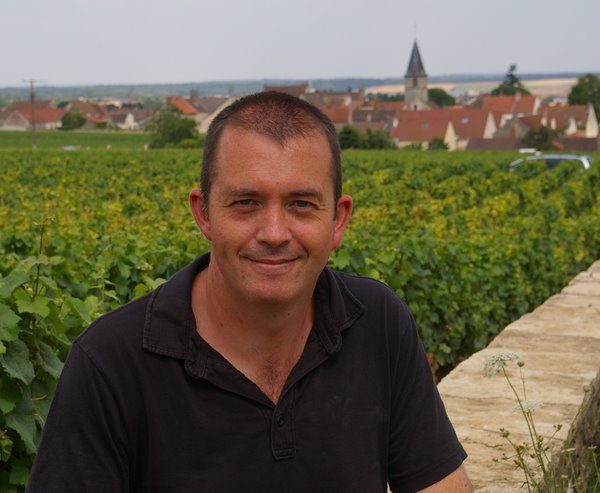
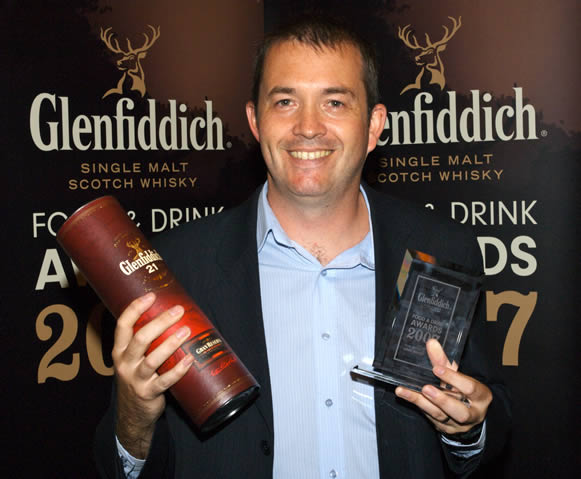
Jamie Goode is a London-based winewriter who is currently wine columnist with UK national newspaper The Sunday Express. He won the 2007 Glenfiddich Wine Writer of the year award for articles in Harpers and The World of Fine Wine, and contributes regularly to a range of other publications including Wine Business International, Wines and Vines, Hong Kong Tatler and Decanter. His first book, Wine Science, won the Glenfiddich Award for Drinks Book in 2006, and has met with critical acclaim.

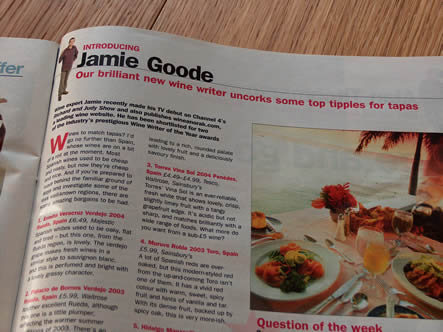
Jamie came to wine writing by a rather convoluted route, via a PhD in plant biology and several years of working as a book editor, before he began publishing wineanorak.com, which is now, one of the leading wine websites. He's a member of the Circle of Wine Writers, the FIJEV and the Association of British Science Writers. His only foray into the world of TV so far was as one of the wine experts for C4's Richard and Judy.

Jamie is married to Fiona, and has two boys, aged 10 and 11. Aside from wines his interests are cricket, football (he's a Manchester City fan), hitting golf balls, playing guitar and relaxing with his family.

Awards:

  • 2008 Portuguese Wine Awards Journalist Award
  • 2007 Glenfiddich Wine Writer of the Year
  • 2006 Glenfiddich Drinks Book of the Year (for Wine Science)
  • 2006 World Gourmet Summit Wine Article of the Year (for a piece in Asia Tatler)
  • 2006 Shortlisted for International Wine and Spirits Competition Communicator of the Year award
  • 2006 Shortlisted for Andre Simon award
  • 2006 Shortlisted for Roederer Wine Writer of the Year 
  • 2005 Shortlisted for Roederer Wine Writer of the Year
  • 2004 Shortlisted for Glenfiddich Winewriter of the Year
  • 2004 Shortlisted for Lanson Ivory Label award (for wineanorak.com)

Contact details:

wineanorak.com
E-mail: jamie@wineanorak.com 
Phone: 020 8890 7330

Jamie Goode in print   

Newspapers

Weekly column in the Sunday Express since June 2005. 

Previously did a weekly column for The Western Mail 

Books

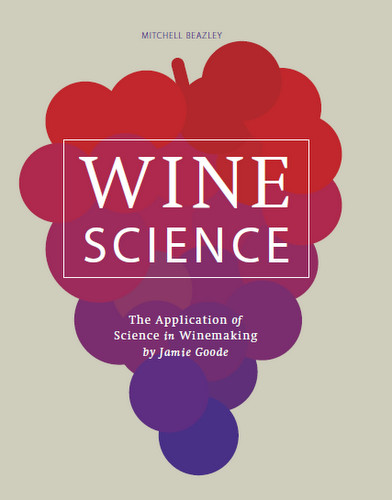
Wine Science, published by Mitchell Beazley (November 2005) and The University of California Press (March 2006). see more at www.wine-science.com. This won the 2006 Glenfiddich Award for best drinks book.

Wine Bottle Closures, published by Flavour Press (May 2006). More details at www.flavourpress.com

Papers in each of two books on Wine and Philosophy, details to follow. My focus is on the perception of wine.

Insider's view sections on Portugal for American Express' Food and Wine Guide 2007, 2008 and 2009

Sections on Portugal, Austria, Germany and Port for Which? Wine Guide 2005.

Contributor to the third edition of the Oxford Companion to Wine.

Magazine Articles

Something in the air
The closures topic has moved away from the natural, screwcap or synthetic debate, and now focuses on oxygen transmission rates, writes Jamie Goode
Drinks Business, February 2008, p 18-23

Diversity makes wine interesting
Thirst (Waitrose), January 2008, p10

Tu es Petrus? Counterfeit wine
A high-profile case has raised awareness of the complex issues involved, but many more recent vintages are also suspect, and the fine-wine trade as a whole is threatened. Jamie Goode investigates the extent of the problem and recommends ways of reducing the risk. 
The World of Fine Wine Issue 18, December 2007, p 122-127

Port
Fortnum & Mason Magazine

German wines
Fortnum & Mason Magazine

Reduction, Sommelier Journal, March 2008

Closure carbon footprints, Decanter

Holding patterns: wine cabinets
Even for those who keep most of the fine wine in specialist storage, it is often necessary to have considerable temperature-controlled space at home. Jamie Goode explains the crucial role wine cabinets can play, identifies the possible pitfalls, and reviews the broad range of products on the market. 
The World of Fine Wine Issue 16, 2007, 88-93

Tainted choice
The debate on closures must seem perplexing to an outsider. Surely putting a stop in a bottle is a simple process? Jamie Goode lifts the lid on this fast-changing issue
Drinks International, 1 May 2007
here

Too much of a good thing 
Alcohol levels in wine have risen over the past couple of decades, and it’s seen as a problem, not least because of the marked sensory effects. If we can understand why it’s happening, then perhaps this will give clues as to how to counter it. The answer could lie just as much in the vineyard as the winery, writes Dr. Jamie Goode.  
Wine Business International, April 6th 2007 
here

MW student in with chance of $1m payout
Decanter.com, March 9, 2007
http://www.decanter.com/news/112353.html

What's the attraction?
Jamie Goode looks at scientific reaction to claims that magnets affect wine flavour
Harpers, 8 March 2007
here
 

Climate Change and its Implications for Wine 
Whether or not you are alarmed by the prospect of global warming largely depends on where you live, your political orientation and how much informed writing you have read on the subject. While many see it as the most serious issue facing…. 
Wine Business International, February 8th 2007
here

Height of fame
High-altitude wines have been lauded for deeper colour, better structure and increased concentration. But what about their health benefits? Jamie Goode looks at the hot topic of resveratrol and asks whether this so-called superdrug has raised more hype than hope
Harpers, 17 Jan 2007       
here

Boxing clever 
Bag-in-box is the neglected child of the trade press. When it comes to packaging issues, bottled wine receives all the attention, with most of the discussion centring on the hot topic of closures; but bag-in-box constitutes a significant proportion of wines sold globally, and it is increasingly important in many markets.
Wine Business International, December 19th 2006 
here

A compound reaction
Mercaptans are responsible for some of the less pleasant wine aromas. Jamie Goode explains how these compounds are formed and why they are important
Harpers, 20 Oct 2006       
here

To cork or not to cork 
Most drinkers think little about the closure that keeps the liquid in the bottle. All they really want is a good glass of wine. Cork taints, however, unleashed a debate that now has repercussions throughout the industry - and beyond. 
Wine Business International, October 10th 2006 
here

Closing in on the future
The closures debate is still in full swing, with the industry split in its support for natural and synthetic corks and screwcaps. Jamie Goode sums up the current state of affairs and takes a look at the latest data to emerge.
Harpers Closures Supplement, December 2006, p 2-6

Oxygen transmission
Natural corks are porous and screwcaps are airtight. It's just oxidation and reduction, right? Jamie Goode says the facts are found between the two.
Harpers Closures Supplement, December 2006, p 20-22

Yeast - wild, cultured, genetically modified
Jamie Goode discusses the different types of yeast, their role in the winemaking process, and effect on wine style and quality
Harpers, 11 Aug 2006       
here

Beauty and the Beast: Random Oxidation
Anxiety is rising among those who still hold white Burgundies from the mid-1990s onward. Dr Jamie Goode explores the complex causes and possible solutions to the problem of premature oxidation, while warning that it may be much more widespread than we realize
World of Fine Wine 14, 2006
here

Old Wine Under New Corks?
Dr Jamie Goode
World of Fine Wine 12, 2006

Vinously speaking
How do we translate what we taste in the glass to what we write on the page? Jamie Goode delves deeply into this most complex of processes.
Harpers, 11 May 2006       
here

The appliance of science
Its dedication to research and ability to put the findings into practice has helped elevate the Australian wine industry to a position that belies its size. Jamie Goode reports
Harpers, 03 Feb 2006
here

Naturalness in wine
Decanter 

Closures: the battle
Wine and Spirit, in press

Douro wines
Wine and Spirit, in preparation

Never the Same Since? Grafted versus non-grafted vines
American rootstocks have proved to be the lasting solution to phylloxera. But can wine from grafted vines ever match that from those on their own roots? Jamie Goode adduces evidence from great 19th-century Bordeaux to present-day apple trees to gauge the desirability and necessity of grafted vines.
World of Fine Wine Issue 13, 2006 

GM vines: is the price worth paying?
The possible introduction of genetically modified (GM) grapevines into California vineyards is currently causing heated debate. At one extreme, scientists are so familiar with the use of genetic modification as a research technique, they can't see what all the fuss is about. At the other extreme, tree-hugging environmentalists see GM crops as a threat to be resisted at all costs.
Wines and Vines January 2006
here 

Synthetic corks
Harpers Closures Supplement 2005

Closures: an overview
Harpers Closures Supplement 2005

Crystal Clear
Does your wine glass make a difference to the taste of your Bordeaux or Burgundy? Jamie Goode has the answer
Hong Kong Tatler, December 2005, p 186-191 (also all the other Asia Tatler titles carried this piece)

Senses and sensibilities
Arguing against a one-size-fits-all model of wine assessment, Dr Jamie Goode highlights the possibilities of creative and figurative language, and reveals the ways in which talking about one sense in terms of another can clarify rather than confuse.
World of Fine Wine Issue 9 November 2005 p 86-91

Bottles versus magnums: is bigger always better?
Addressing the hottest topic in wine science - post-bottling wine chemistry - Jamie Goode discusses the anecdotal evidence and scientific theory relating to the performance of bottles, half-bottles and magnums
World of Fine Wine Issue 9 November 2005 p 57-61

Wine regions on the rise
The map of the world of wine has been redrawn over the past decades, with new-world challengers taking on the old guard. Reknowned wine writer and author Jamie Goode searches out some of the current centres of oenological excellence
Summit Magazine, November 2005, p 48-51

Naturalness in wine
Wines and Vines, November 2005
here

Have you got a nose for profit? 
Primeline (Nat West Bank customer magazine), October 2005
http://www.primeline.co.uk/content.asp?id=OUR_MAGAZINE/WINE

Oxidation 
Oxygen. It’s 21% of the air we breathe and it sustains our life, but no less an authority than Louis Pasteur described it as the ‘enemy of wine’. Perhaps this is putting things a little strongly. At certain stages in the winemaking process some oxygen is needed, and there are also a number of wine styles, notably Madeira, Sherry and Tawny Ports, that derive their character – at least in part – from Oxidation. ...
Wine International, 16 May 2005  

http://www.wineint.com/story.asp?storycode=1810

Fault or Fancy: Understanding Volatile Acidity 
In the final instalment of our four-part series on ‘undesirable’ characteristics in wine, Jamie Goode investigates volatile Acidity – a fault caused by rogue bacteria that need oxygen to survive.
Wine International, 22 August 2005  
http://www.wineint.com/story.asp?storyCode=1908

Faults: Reduction 
Now, I’m guessing that most readers have never heard of ‘reduction’. If you fall into this category, my job is to convince you to read about what is actually a complex wine science topic that you’ve previously been unaware of, and I reckon I’ve only got a few sentences to grab your attention. A tough call.

Wine International, 22 April 2005 
http://www.wineint.com/story.asp?storyCode=1777

Closures and the IWC fault clinic results
Wine International

Can oak alternatives replicate the function of barrels?
Oak's long association with wine is a remarkably enduring one, based on the serendipitous discovery that the two complement each other rather well. Even when older, larger barrels, which don't have such a direct flavor impact, are used, their ability to allow exposure of the contents to small amounts of oxygen is important in the development of the wine. But oak barrels are difficult to manage, expensive and a bit unpredictable. It's easy to see why winemakers have been on the lookout for alternatives to achieve the enological impact of oak without the cost and trouble of barrels.
Wines & Vines, July 2005

Temperature and humidity
Harpers Cellaring and Warehousing Supplement

Screwcaps, oxygen transmission and successful wine ageing
Harpers, 21st May 2005

The wine route
With a vast variety of styles, producers and grape varieties, the business of wine tasting and purchasing can be baffling. Wine guru Jamie Goode reveals how to get the most out of your vino and gives a few handy tasting tips, too.
My Travel inflight magazine, May 2005
www.mytravelmag.com/features/2005/may/wines.html

All in the mind
Why is it that a wine described as 'spicy' or 'brambley' tastes anything but to you? Jamie Goode looks at the range of factors that determine how we perceive taste. 
Harpers Wine and Spirit Weekly, 29 April 2005, p 22-26  

To recork or not
World of Fine Wine, issue 4, 2005, p 16

Global warming and fine wine production: what's the prognosis? 
World of Fine Wine Issue 4, 2005, p 14-15

Wine and the brain
World of Fine Wine, Issue 5, 2005

The new Barossa
Harpers Wine and Spirit Weekly.....

Nautralness in wine
Harpers Wine and Spirit Weekly.....

Wine and health
Hong Kong Tatler

Cork Fights Back 
The cork industry currently looks a bit like a dinosaur watching the meteor impact that occurred at the Cretaceous–Tertiary boundary 65 million years ago. One imagines a slightly bewildered expression as it sees its once seemingly unassailable position as the closure dissipate in the face of an army of alternatives, led by the screwcaps.
Wine International, 19 February 2005 
http://www.wineint.com/story.asp?storyCode=1696

New Zealand Screwcap Wine Seal Initiative
Harpers 14 January 2005

Tannins
We’ve all heard of tannins, but what exactly are they and what do they do? Jamie Goode delves into a highly technical aspect of wine science to help shed some light on the important role of tannins in red wine.
Harpers Wine and Spirit Weekly, 5 November 2004, p 24–26

Shooting stars
A host of energetic and innovative Portuguese winemakers are setting new standards for the country's wine industry with an impressive range of high-quality wines. Jamie Goode meets some of the leading lights on the scene. 
Harpers Portugal supplement, November 2004, p 12-15

Round the regions
In this region by region analysis, Jamie Goode looks at how Spain is currently faring in the UK marketplace and considers the grounds for both optimism and concern.
Harpers Spain Supplement, October 2004, p 8–13

Global warming and its implications for viticulture
If we can’t adjust the thermostat, we may have to change our wines, Jamie Goode writes.
Wines and Vines, November 2004, p 36–45

Tomorrow’s wine
Scientific advances look set to transform the world of winemaking. Jamie Goode talks to precision viticulture experts and the winemakers who are choosing technology over tradition.
Wine International, September 2004, p 54–57

Family Feud
Han exclusive look inside the house of Mondavi: Jamie Goode talks about the man who changed the world of wine and his legacy. Hong Kong Tatler, September 2004, p 128–130

La vie en rouge
Can drinking red wine really make us healthier? Jamie Goode surveys the recent research on the subject and uncovers some intriguing hypotheses.
Harpers Wine and Spirit Weekly, 3 September 2004, p 23–25

Hot, hot, hot
Every year, global warming is having an increasing effect on the world’s climate. Jamie Goode assesses the consequences this may have on the quality and nature of winemaking and warns that we need to act now before it’s too late.
Wine International, August 2004, p 50–53

Twist and shout
Twist-tops are the hottest topic in the wine world right now, says Jamie Goode, and new information is about the lid right off it.
Hong Kong Tatler, August 2004, p 78–79

Turf War
The glory days of the celebrity winemaker are ending, says Jamie Goode. Coinoisseurs are turning back to basics, with the emphasis on the land.
Hong Kong Tatler, July 2004, p 76–77

The roots of terroir
Terroir: is it a convenient marketing tool overused for marketing regions, or a fundamental part of a wine’s intrinsic character? Jamie Goode evaluates both sides of the argument, and tastes some classic terroir wines.
Wine International, July 2004 p 56–59

Top drops
Wine collectors are prepared to spend serious money enhancing their cellars by buying top bottles at astonishing prices. Jamie Goode takes us on a tour of the wine world’s elite.
Hong Kong Tatler, June 2004, p 156–161

Root cause and effect
Once relegated to the depths of viticultural research, the phenomenon of partial root drying has come into its own as a powerful contributor to efficient water use. Jamie Goode reports on this largely British discovery.
Harpers Wine and Spirit Weekly, 21 May 2004, p 21–24

Privileged access
The UK is one of the most desirable and challenging markets for prospective wine sellers. Jamie Goode dissects the state of the UK wine retail scene and discusses the implications for both retailers and producers looking to sell their wines here.
Harpers Wine and Spirit Weekly, 14 May 2004, p 38–42

Compound interest
Maligned by some, considered indispensable by many more, sulphur dioxide is a subject that cannot be ignored. Jamie Goode gets scientific and brings the SO2 story to life
Harpers Wine and Spirit Weekly, 26 March 2004, p 20–22

Storage solutions
Not having the money for a swanky cellar conversion is no excuse for storing wine poorly. Jamie Goode looks at the various options available at different price points. Decanter, March 2004, 56–59

Creepy crawly chronicles
A new book on the history of phylloxera provides a detailed survey of how this pest has shaped the wine world as we know it. Jamie Goode reviews a good read.
Harpers Wine and Spirit Weekly, 27 February 2004, p 29–31

To your good health
Forget apples – current research suggests it’s a glass or two of red wine a day that will keep the doctor away. Jamie Goode explains the rationale behind this welcome finding and proposes a toast to longevity with some quality Cabernet Sauvignon.
Wine International, February 2004, p 68–70

Honeymoon Sweet
Start a love affair with sweet wines, says Jamie Goode, and you won’t regret it
Hong Kong Tatler December 2003, p 118–120

Meddling with nature?
As the debate on genetically modified crops rages on, Jamie Goode scrutinizes the argument and talks to researchers on the front line about the risks, the drawbacks and the advantages of transgenic vines. 
Wine International, November 2003, p 50–53

Caving in
Storing wine at home is particularly tricky in our subtropical climate, but Jamie Goode offers tips from simple storage to building out your own cellar.
Hong Kong Tatler, November 2003, p 114–116

Thinking drinking
Research reveals that sommeliers use more of their grey matter than wine novices - but why? Using his scientific background, and a spot of beginner neuroscience, Jamie Goode unravels how aromas and flavours are processed in our brains.
Wine International, October 2003, p 48-50

So the food's good, but how fine's the wine?
The Western Mail magazine's wine guru, Jamie Goode, who runs wineanorak.com, reveals his essential ingredients for the ideal dining out experience
Western Mail Magazine, 25 October 2003, p 12-13

Will cork become the sheep-gut condom of our times?
Jamie Goode goes behind the recent tabloid headlines on screwcap versus cork.
Harpers Wine and Spirit Weekly, 26 September 2003, p 11 

Mechanisms of terroir
As more new world producers start to take an interest in terroir, scientists are turning their attention to defining it and explaining how it affects a wine. Jamie Goode investigates.
Harpers Wine and Spirit Weekly, September 12 2003, p32-35

A most spectacular wine region
The Beautiful Douro valley with its impressive steep slopes is mainly known for the production of Port wine. But there is a revolution going on. Innovative wine makers are producing stunning table wines - and are getting worldwide recognition among connoisseurs.
Villas & ... (Spain and Portugal) September 2003, p 116-123

Portugal: a guide to its wines and some of its leading wineries
I authored the main text for this ICEP-sponsored 32 page supplement, distributed free with the Evening Standard, September 2003

Reduced circumstances
Increased use of screwcap closures has highlighted the problems of reduction in wines. But is reductive winemaking always a bad thing? Jamie Goode explains both sides of this complex topic and argues that more research could paint a different picture of terroir-driven wines.
Harpers Wine and Spirit Weekly, July 18 2003, p 22-26

Allergic Reaction
Bad headache, feeling rotten? We all know when we have over-indulged the night before, but what if you only had one glass? Jamie Goode reports on the possible allergies and adverse reactions to wine, and recommends some vinous solutions. 
Wine Magazine (now Wine International), June 2003, p 66-68

Retail Therapy
Shopping in London can be a stressful exercise. Jamie Goode maps out a clear path and points wine lovers in the right direction. 
Decanter, June 2003, p 78-80

Genetically modified vines
Harpers Wine and Spirit Weekly, June 2003

Taint necessarily solved
Sabaté claims to have come up with a technique for solving cork taint, an ailment that attacks 5% of naturally sealed wines. But will this process, successful in tests, prove viable in mass production? Jamie Goode reports
Harpers Wine and Spirit Weekly, 16 May 2003, p 94-98

Rising in the yeast
Brettanomyces is a common defect in wine, but research into the yeast suggests a number of different strains. Jamie Goode sifts the available data and canvasses the views of world-famous winemakers to determine how widespread the problem is, and whether brett can ever be a good thing. 
Harpers Wine and Spirit Weekly, 18 April 2003, p 42-46

Nature or nurture?
Is the skill of nosing and tasting wine genetic, or can it be learned? Must you look to your ancestors for answers, or can the nearest wine educator help? Jamie Goode assesses the scientific research and provides a DIY test so you can evaluate your chances in the tasting room. 
Wine magazine, April 2003, p 44-46

Stars in their eyes
What is the essence of biodynamic viticulture, and how does biodynamics differ from conventional and organic agriculture? Does it actually work, and if so, how? And can biodynamics be reconciled with a scientific view of viticulture? Jamie Goode investigates.
Harpers Wine and Spirit Weekly 17 January 2003, p 24-27

Grain of Truth
By the end of the 1990s, Sabaté’s Altec closure was widely criticised for unacceptable levels of taint. After modifications, the French manufacturer invited experts from the trade and press to test the performance of its old and new closures. Jamie Goode analyses the research model’s openness, methodology and its surprising results
Harpers Wine and Spirit Weekly 15 November 2002, p 32-36

Back to square one
With a fierce debate ranging in the wine trade over the validity of the Wine and Spirit Association’s research into cork taint, Jamie Goode raises doubts over the methodology employed and asks is it time to rip up the report and start again?
Harpers Wine and Spirit Weekly 11 October 2002, p 36-38

Top table
Renowned for its Port, the Douro Valley has been slow to make the grade as far as table wines are concerned. But, as Jamie Goode reports, a new generation of like-minded winemakers is helping to establish it as Portugal’s most dynamic wine region.
Harpers Wine and Spirit Weekly 20 September 2002, p 20-26  

Are you a supertaster?
How are your tasting abilities determined by the complex interaction of your tongue, nose and brain? Take a trip through the human tasting zone...
Good Taste magazine (South Africa) September/October 2002, p 52-56

Home and (not too) dry
Not everyone is lucky enough to have their own wine cellar, but there are alternatives. Jamie Goode finds the best ways to store your wine at home.
Decanter, August 2002, p 62-63

Pulling out all the stops
Reverse osmosis, spinning cones and micro-oxygenation are three winemaking techniques in greater use than the wine trade would like to admit. How do these practices affect wine, and is the controversy surrounding their use just another stick with which to beat interventionist winemakers? Jamie Goode investigates. 
Harpers Wine and Spirit Weekly 5 July 2002, p 27-30

Systems making sense
The recent recognition of umami as the fifth taste has stimulated further research into the range and sensitivity of the human palate. So how exactly are people’s wine tasting capabilities determined by the complex interaction of tongue, nose and brain? Jamie Goode takes a trip through the human tasting zone.
Harpers Wine and Spirit Weekly 3 May 2002, p 34-38

Steep and narrow
This year’s annual Portuguese trade tasting has broken with tradition to focus on varietal wines. With many in the trade facing an uphill struggle to reclaim consumer support, the move looks geared to providing Portuguese wines with a more focused niche appeal. Will it work? Jamie Goode previews the forthcoming event.
Harpers Wine and Spirit Weekly 19 April 2002, p 37-43

Ten years in
Writing about Portugal’s red wines it is hard not to reach for clichés like ‘potential’ and ‘quality revolution’. The country has exciting indigenous grape varieties and a plethora of climates and terroirs ideally suited to red wine production. But only over the last decade has this potential begun to be realized. By Jamie Goode
Wine magazine Portuguese Supplement 2002, p 10-14

back to top