jamie goode's wine blog

Sunday, May 04, 2008

Two stunning kiwis, and a note on the power of terroir


To my mind, New Zealand is the new world country that is coming closest to making high-end wines with some of the complexity and interest of the best from the old world. [Maybe this is a bit unfair on California.] I'm hesitant to say this lest it be misinterpreted; I don't want people to think I'm an old fogey who thinks that Bordeaux and Burgundy have a monopoly on fine wine. But if you're honest, and you've tasted serious high-end wines from around the world, then you'll doubtless share my view that the new world can't yet compete at the very top end.
Anyway, New Zealand continues to make strides, and here are two wines that I reckon are pretty serious. The first is the latest release of Clos St Henri, the 2006 of which I tried a couple of weeks ago in Tate Britain. The second is a delicious Merlot (don't say that often...) from the Gimblett Gravels, a fantastic terroir in New Zealand's Hawkes Bay region. I'd say this wine shows as much Gimblett character as it does Merlot character; I reckon a Gimblett Syrah is closer to this wine than a Merlot from somewhere else, if you see what I mean.
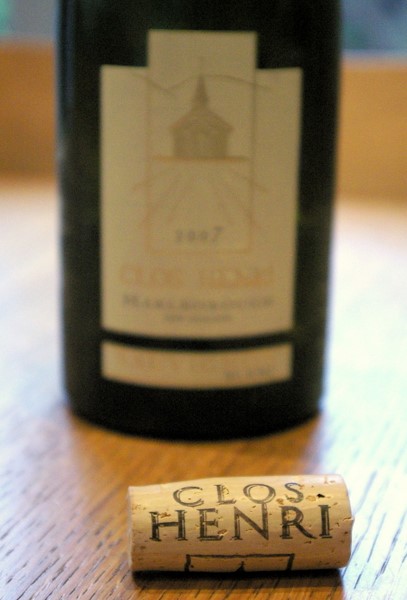
Clos Henri Sauvignon Blanc 2007 Marlborough, New Zealand
Amazing stuff, this Sauvignon made by Henri Bourgeois of Sancerre. It's beautifully textured with good balance between the sweet, ripe pear and peach notes and the green grassy herby, gooseberry character. Real intensity and complexity here, with lovely focus and just the right amount of greenness to confer savoury freshness. I love the packaging, too - this is one of the few (5%?) of New Zealand wines that is still cork sealed. 93/100 (UK agent Les Caves de Pyrene)
Villa Maria Reserve Merlot 2005 Gimblett Gravels, Hawkes Bay, New Zealand
This tastes so much of the Gimblett Gravels - it reminds me of the Syrahs that I've had from here, even though it's a Merlot? Is that terroir? I still think Syrah is the best variety for this patch of ground, but there's no doubting that this is a lovely Merlot. Deep coloured, it has a lovely fresh, bright peppery, gravelly edge to the well defined blackberry and raspberry fruit. The palate has lovely definition with lovely freshness, concentration and ripeness. There's some nice tannic structure. Pretty serious, especially for a Merlot. 93/100 (£15.99 Waitrose, http://www.nzhouseofwine.co.uk/)

Labels: , , , , ,

Friday, December 07, 2007

Heathcote Shiraz: regionality in Australia


Regionality is a bit of a theme in the new world, these days. People are recognizing that there are some sites that are just great for wine growing, which I guess fits in with the notion of terroir. In Australia, one of the buzz regions is Heathcote in Victoria (see here for an introduction to the region), which specializes in Shiraz wines with a real presence and freshness,

Tonight I'm drinking a Heathcote Shiraz with a real sense of place. It tastes like some of the other wines I've had from this region. The fact that, irrespective of winemaker, a certain place can produce wines that resemble each other, is something I find exciting.

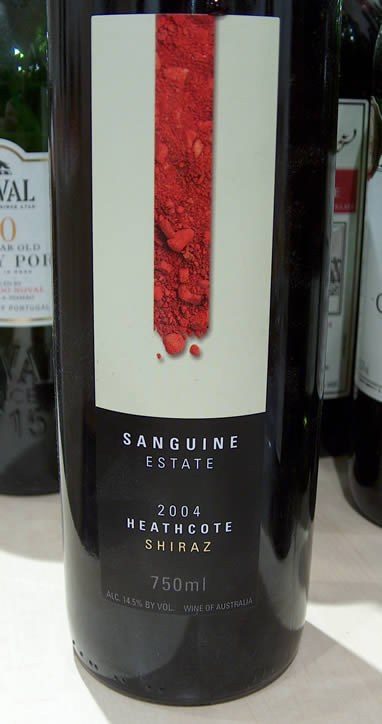
Sanguine Estate Shiraz 2004 Heathcote, Australia
This is a really expressive Heathcote Shiraz with a sense of place. The nose is quite fresh with sweet dark fruits together with a bright peppery, meaty character. It's aromatically alive and fruit driven, with a really appealing, almost floral complexity. The palate is ripe, sweet and dekicious, but there's a lovely freshness to the dark fruits which prevents it from becoming over-the-top. It's definitely a warm climate wine, but it's also fresh and expressive, too. 92/100 (£16.95 Great Western Wine)

Labels: , , , ,

Monday, November 19, 2007

Gestos Malbec: cheap and good

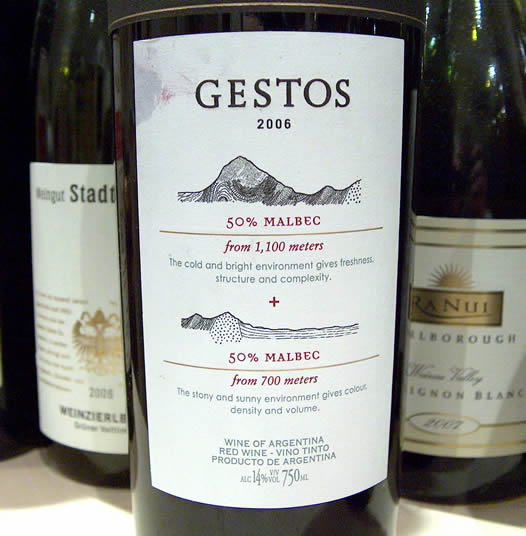
I'm hesitant to describe a £6 wine as 'cheap', because for many people that's quite a bit of money, and you'll just think I'm some loaded snob. But, let's face it, £6 isn't a lot for a bottle of wine these days. Maybe I should use the less loaded term 'affordable'. Well, here's an affordable Argentinian wine that has quite a bit going for it, including a really attractive label design that attempts to communicate the concept of terroir to the drinker. On the back label it says: 'Gestos made from earth, altitude, climate and grape giving wines their own soul and character'. It's nice to see terroir being used in the marketing of new world wines.

Finca Flichman 'Gestos' Malbec 2006 Mendoza, Argentina
An equal blend of grapes from 1100 m and 700 m, this is a deep coloured wine. The nose shows raspberry and blackberry fruit with a savoury, spicy overlay and some coffee and tar oak overtones. It's quite tight and reductive. The palate shows nice fresh red fruit character with a bit of plmmy bitterness and some spicy oak influence. It's a savoury wine with some depth, and drying, grippy tannins on the finish. Yet there's some ripeness and charm here also. It's not the most refined wine you'll ever drink, but for the price, there's a lot going on here, and it is tremendously food friendly. Would be perfect with a big Argentinian rump steak. 87/100 (£5.99 Majestic, Stevens Garnier)

Labels: , ,

Wednesday, October 17, 2007

Sena, Henschke and some boring Zins

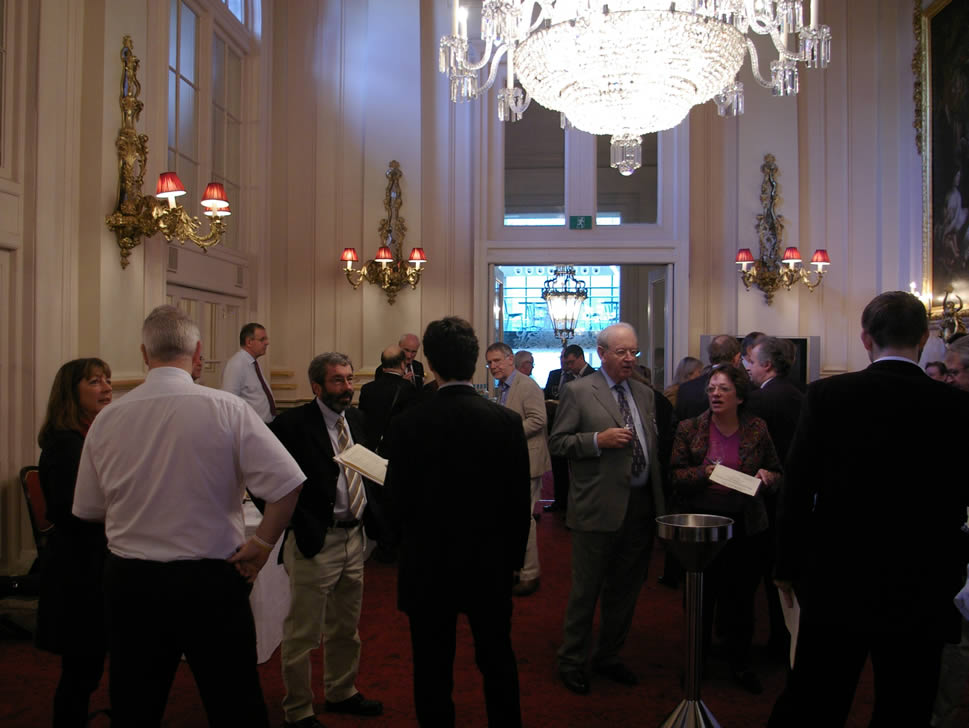
This morning I went to a seminar on Terroir and innovation in the new world, put on by Lay and Wheeler to showcase their portfolios from Henschke and Sena/Arboleda. Prue and Stephen Henscke, and Eduardo Chadwick gave presentations, and we tasted their wines.

I was very interested in what Prue had to say about the vineyards at Henschke: they are adopting a melange of organic, biodynamic and IPM practices to create their own sustainable form of viticulture. I also thought that the Henschke range, which is pretty broad these days, was admirably consistent. Hill-of-Grace 1998 is developing into a very nice wine. 2002 is currently youthful and tight.

If I'm honest, I was disappointed by Sena, Eduardo Chadwick's icon wine. Four vintages were shown: 2004, 2003, 2001, 1996. They were all good, but no more than just good. For me, they lacked excitement and life. 1996 Sena, for example, was ageing gracefully and tasted nice, but I wouldn't say it was world class. And Sena is the icon wine that beat a bunch of first growths at the Berlin tasting back in 2004.

I have a problem with the results of this Berlin tasting. I'm shocked that (1) the given group of journalists actually preferred the Sena and its stablemate Vinedo Chadwick over Lafite, Margaux and Latour, and (2) that they didn't spot the Chilean wines as Chilean in this line-up. Look, I'm not suggesting that Chilean wines can't be as good, or better than first growth Bordeaux - after all, I love to think I'm open-minded - it's just that so far, I've not tasted a Chilean wine that has in qualitative terms even come close to top-notch Bordeaux. I'll be brutally honest with you: if these Senas I tried today are representative, then I reckon the tasters tasted badly that day. They got it wrong. I will be thrilled to report back on the exciting, complex, vibrant, balanced Chilean wines that I taste when I visit Chile in January, but so far, I haven't met them.

Stephen Spurrier, famous for his 1976 tasting where Californian wines outshone French classics took part in the Berlin tasting, and preferred the French wines. 'Logic dictated that the French or Italian wines were going to win, but what happened was that the Chilean wines took the top places', he recalls. 'The tasters preferred the Chilean wines, which was quite extraordinary.'
Tonight I've opened a few bottles. A couple of Zinfandels that were as boring as the one I mentioned yesterday, with just some red berry fruit and a hint of greenness, and then a much nicer Shiraz Viognier from McLaren Vale with ripe pure fruit and a bit of elegance, albeit at 15% alcohol (Battle of Bosworth 2005 - organic - £9.99 Oddbins).

Labels: , , ,

Monday, May 14, 2007

Talking terroir...

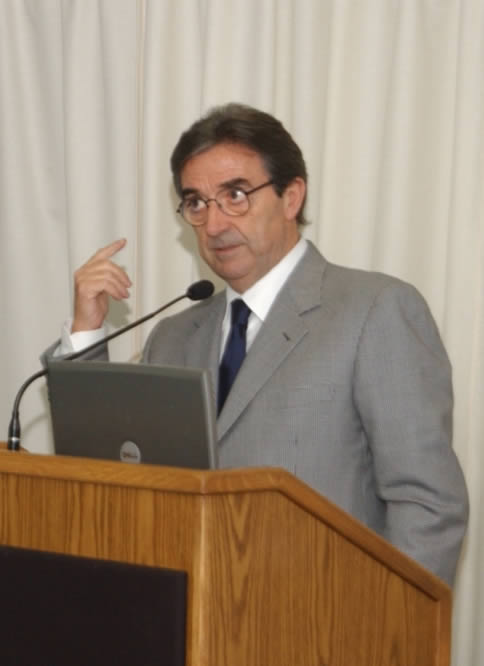
Riccardo Cotarella is one of the most famous figures in Italian wine. He's a consulting winemaker to a slew of different estates, many of whom have caught the eye of Robert Parker. But not everyone is a fan of him: like that other famous consultant Michel Rolland, he's been criticised for making wines that taste a bit similar. Wines that impress, but which have been divorced from their origins. He was in London last week presenting many of these wines at a seminar, where he defended himself thus:

'To say that a consulting winemaker will make the same wine using the same grape and vinification techniques in different countries or even different areas of the same country is a complete stupidity. The people making these claims wouldn’t know the difference between a grape vine and a fig tree! In my work with the students at Viterbo University where I am a professor of Oenology we have demonstrated that using the same varietal from the same vineyard with the same treatment in both the vineyard and the winery will produce two very different wines when you vinify the grapes that come from the top of the vineyard on the top of the hill vs. those from the bottom of the same vineyard...90% of the character of a wine comes from the terroir, not the grapes.'
This reads right. Yes, we beleive in terroir, and that it's the way to go for fine wine. But Cotarella fails to acknowldege here that terroir itself is actually quite fragile, and is easily lost - most commonly by picking too ripe and using interventionist winemaking. If you want to bring out terroir - the sense of place in a wine - you have to work hard at your viticulture and take care not to mess up in the winery. It's possible for consultant winemakers to introduce techniques such as extended cold macerations, long hang times, and invasive new oak usage that can obscure origins. And I have to disagree with the last statement. I think the grape variety is very important, otherwise there wouldn't be an insistence that Pinot Noir is the sole red variety in Burgundy, for example. This grape happens to be the best lens through which the Burgundy terroirs can be viewed, if you like. Or, we could say that 90% of the character of a wine can come from the terroir, but only if you let it.
I'm an open minded guy, so I reserve judgement about Cotarella-influenced wines until I've tried enough of them to form an opinion. But I did find this quote interesting, which is why I've commented on it.

Labels: , ,

Tuesday, May 08, 2007

More on terroir and minerality

Really good article on terroir by Harold McGee and Daniel Patterson in the New York Times.

'The idea that one can taste the earth in a wine is appealing, a welcome link to nature and place in a delocalized world; it has also become a rallying cry in an increasingly sharp debate over the direction of modern winemaking. The trouble is, it’s not true.'

They continue:

'Grape minerals and mineral flavors are also strongly influenced by the grower and winemaker. When a vineyard is planted, the vine type, spacing and orientation are just a few of many important decisions. Growers control the plant growth in myriad ways, such as pruning, canopy management or, most obviously, irrigating and replenishing the soil with manures or chemical fertilizers. The winemaker then makes hundreds of choices that affect wine flavor, beginning with the ripeness at which the grapes are harvested, and can change the mineral content by using metal equipment, concrete fermentation tanks or clarifying agents made from bentonite clay. Jamie Goode, a British plant biologist turned wine writer, describes in his superbly lucid book “Wine Science” how techniques that minimize the wine’s contact with oxygen can increase the levels of sulfur compounds that may be mistaken for “mineral” character from the soil.'

Labels: ,