|

Great wine inevitably has a sense of
place, and is a product of both the natural environment and human culture
in which it is birthed. What better way is there to gain a deeper
appreciation of a region's wine than to visit the vineyards that produced
it? Fortunately, wine regions are often very accessible and open to
tourists, and one of my favourite occupations is to combine a holiday with
a visit to wine country. On the following pages you'll find my illustrated
accounts of trips that I have enjoyed to various wine regions, together
with tips on how to get the best from your own forays into wine country.
Beaujolais (May 2016, April 2018)
Gamay is
a grape whose time has come, and Beaujolais is its home. This region is
currently experiencing a revival, with lots of new producers emerging who
farm properly and work more naturally in the winery. Come and meet them!
Loire Valley Road Trip (May 2017)
I join up with
Canadian wine friends Nicole Campbell, Lexi Wolkowski and Krysta Oben to
tour the Loire, from Sancerre to Muscadet (with film).
Mornington Peninsula, Australia (February 2017)
The Mornington Peninsula is Australia's premier Pinot Noir region, and it
also makes some excellent Chardonnay. I travel to meet with some of the
leading boutique wineries who have helped to establish its reputation.
Chile and Argentina (December 2016)
Madeira (November 2016)
Madeira is the niche of the niche. On this spectacular Atlantic island a
unique style of wine has emerged. I visit with leading producer Blandys to
learn all about it (includes a film).
Alternative Bordeaux (October
2016)
Provence (revisited; October
2016)
Nova Scotia, Canada (October 2016)
Elgin Valley, South Africa
(October 2016 and March 2017)
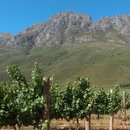
The Elgin Valley is South Africa's
coolest wine region, and I visited in October 2016 and then the following
March to get a feel for the place.
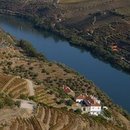
The Douro Valley (September 2016)
McLaren Vale, Australia (July 2016)
South Australia's
McLaren Vale is sometimes overlooked in favour of the Barossa and Adelaide
Hills. Here I take a tour of some of the most interesting producers in
this now-dynamic region.
Germany's Wine Regions (June 2016)
The Centre Loire (May 2016)
Champagne (October 2015 and
April 2016)
Douro Valley, Portugal
(revisited)
South Island NZ Road Trip
(January/February 2016)
New Zealand's South Island had no vines until 1972. Now it's an exciting,
dynamic wine destination. I travel from Central Otago up through Waitaki,
through to North Cantebury and then up to Marlborough, visiting wineries
on the way.
Washington
State, USA (June 2015)
Head over the Cascade Mountains from Seattle and
you reach the Columbia Valley, home to the wines of Washington State. This
dry, arid region with its interesting geology is making some interesting
wine. I visit.
Vinho Verde, Portugal
(April 2015)
The northeast of Portugual produces Vinho Verde. It used to be light,
fizzy and inconsequential, but now producers are beginning to make more
serious, single-variety wines. I visit to check them out.
The Ahr Valley, Germany (January
2015)
A small, beautiful valley that's Germany's smallest and most northerly
wine region. It specializes, surprisingly, in red wines.
Provence (September 2014)
One of the wine world's great success stories is Provence rosé. This is a
region devoted to pink wine, and their popularity has never been higher. I
travel to take a look at the secrets behind this rosé revival.
British Columbia, Canada (June
2014)
The Okanagan Valley, a four-hour drive from Vancouver on Canada's west
coast, is a scenically beautiful wine region, making increasingly
impressive wines. I visit for the first time.
Oregon revisited (July 2014)
Oregon is just so lovely in the summer. This is Pinot Noir country, but
it's also making good Riesling, Chardonnay and Pinot Gris. Six years after
my first visit, I travel to Oregon to see how things are progressing.
Central Otago revisited
(February 2014)
It's back to one of the world's most appealing wine regions: Central Otago
in New Zealand. I visit several producers and attend the Pinot Noir
celebration here for the first time.
Ontario, Canada
(July 2013)
Canada is making great strides as a wine-producing country. Here I report
on a visit to Niagara and Prince Edward County in Ontario.
Hemel-en-Aarde, South Africa
(March 2013)
This is one of South Africa's most exciting regions at the moment, and is
gaining a reputation for Pinot Noir in particular. I check out some of the
top producers.
Alsace
(June 2012, October 2012)
One of France's most picture-perfect wine regions, specializing in
aromatic white grape varieties. This was my first visit, and I was hooked.
Stellenbosch
revisited (March 2012)
South Africa's largest and most famous wine region. I had overlooked it
on recent visits, so it was time to go back. I'm glad I did.
The
Swartland, South Africa (November 2011)
The Swartland Revolution is one of the world's top wine events, in my
opinion, at least. I visit this dynamic wine region to take in some
revolutionary spirit.
Russia's
vineyards (September 2011)
My first visit to Russia takes me to the Black Sea Coast, where many of
Russia's vineyards are located. It's an eye-opening visit.
Visiting
the Symingtons in the Douro, Portugal (September 2011)
The Symington family own some of the leading Port houses, including
Graham's, Warre's and Dow's. I take a visit to Vila Nova de Gaia and then
the Douro to get a feel for their work.
The
diversity of Chile
(December 2010)
Chile's newer, cool-climate wine regions are attracting a lot of
interest. This, my second visit to the country, takes me from the Bío
Bío Valley in the south to the magical Elqui valley in the far north,
with lots of discoveries on the way
Rioja,
Spain (October 2010)
The most famous of Spain's wine regions, and well known for its oak-aged
reds. I visit a range of different wineries, from the small to very large.
Martinborough,
New Zealand (February 2010)
Located near to the capital, Wellington, Martinborough is a small region
famous for its Pinot Noir, but also making really good Syrah (in tiny
quantities) and Sauvignon Blanc.
Central
Otago, New Zealand (February 2010)
At the bottom of South Island, Central Otago is one of New Zealand's most
exciting wine regions, making great strides with Pinot Noir. It's a wild,
intense place to visit.
South
Africa revisited (November 2009 and October 2010)
Time to head back to the beautiful winelands of the western Cape, to see
the progress made by South Africa's leading producers. And two recent
trips have confirmed that there has been lots of progress.
California's
Napa Valley (November 2009)
The USA's most famous wine region is in easy striking distance of San
Francisco, and it's well set up for wine tourism. I visit, and discover
that there's substance behind all the style - this is a great place for
growing wine grapes.
Quinta
do Noval and the
Taylor group, Douro, Portugal (September 2009)
It's harvest time in the Douro, and I combine a trip to two different
producers: Quinta do Noval, and the Taylor group (visiting Taylor's,
Fonseca and Croft).
Burgundy
(June 2009)
One of the world's great wine regions, a trip to Burgundy is a bit like a
pilgrimage. You just have to visit once in your life. On this trip I'm
lucky enough to get into some of the top domaines, and check out some of
the most famous vineyards.
Germany's
wine regions (May 2009)
I'm on the Riesling trail, visiting Germany's top wine regions. This is
spectacular wine country: in particular, the ultra-steep Mosel vineyards
are one of the wonders of the world.
Vinho
Verde, Portugal (November 2008)
Vinho Verde country, in the north of Portugal, is very pretty. This is
where crisp, mineral, slightly spritzy whites and incredibly vivid, fresh
red wines find their home.
Tuscany
(October 2008)
Chianti Classico, the central portion of Tuscany's most famous region,
is an area of beautiful rolling hills, cypress trees, old farmhouses and
vineyards. I check out some of the leading producers, and witness the
harvest underway.
Oregon
(July 2008)
With its rolling hills, Oregon has some beautiful wine country. Its
boutique, small-scale producers are getting quite a reputation for their
Pinot Noirs, which in many critics' eyes are the best outside Burgundy. I
visit the International Pinot Noir Celebration, and then head off to see
the vineyards.
Mendoza,
Argentina (March 2008)
Argentina is famous for its two 'M's - Meat and Malbec. Mendoza is its
leading region, and this is the destination for my first foray into
Argentine wine country, visiting some of the vineyards nestled into the
foothills of the Andes.
Chile
(January 2008)
A long thin country bounded by the Andes on one side and the Pacific on
the other, Chile has probably improved more over the last decade or two
than any other wine nation. I visit to judge the Wines of Chile awards and
look around the wine regions.
New
Zealand (November
2007)
Ultra-desirable travel destination New Zealand is a bit of a wine
tourist's paradise. Both north and south islands have beautiful vineyard
regions, and travelling around is a real doddle. I visited a range of
producers in four regions, ranging from the large to the tiny.
Margaret
River, Western Australia (April
2007)
Western Australia's premier wine region may be a bit isolated, but
since its birth almost 40 years ago, it has developed a huge reputation
for top quality Cabernet and Chardonnay, as well as its distinctive
Semillon Sauvignon blends. And with beautiful beaches only ten minutes
away, it's an ideal destination for a holiday.
The
Yarra Valley (March 2006)
Since its rebirth in the 1970s, after wine production had stopped for 50
years, the Yarra has established a reputation as one of Australia's
premium cool-climate regions. I visited and was delighted to discover some
fantastic wines.
Swiss
vineyards (January 2006)
Off the radar screens of most wine nuts, Switzerland is currently making
some really good wines in a diversity of styles. I spend some time in the
vineyards and taste with 25 of the leading producers.
South
Africa's winelands (December 2005)
A return to Cape Town gave me a chance to check out some of the new
wave of South African wines, as well as catching up with some of the more
dynamic favourites. You can find out how I got on here.
The
Alentejo, Portugal (June
2005)
In Portugal's new wine revolution, two regions are leading the pack by
some way. There's the Douro, which I've covered in depth elsewhere on this
site, and the Alentejo, the focus of this series. It's an open, sunny
land, with a vista of wheat fields, cork groves, and increasingly
vineyards, making some impressive wines.
Austria
(October 2004)
It's no longer a secret that Austria makes some fantastic wines, both
white and red. In October 2004 I toured the Burgenland and Kamptal/Kremstal
regions, meeting some of the leading producers - here's my report.
The
New Barossa (September
2004, October 2005)
The historical heartland of the Australian wine industry, the Barossa saw
hard times in the 1980s when attention shifted to cooler-climate regions.
But now it's back, and a raft of young winemakers is revitalizing the wine
scene there: in this extensive series, based on two visits, I take a look
at what's going on.
The
Clare Valley (September 2004)
The Clare is a slightly sleepy, but beautiful small wine region in
South Australia. I take a look and discover some lovely wines.
The New Douro (May 2004)
Back in 2002, Jamie Goode first visited Portugal's spectacular Douro
region to report on the table wine revolution that was taking place. In
May 2004 he revisited the region, to delve deeper and see how progress was
going. Here's his in-depth, illustrated report.

Portugal's
Dão (May 2004)
The Northern Portuguese wine region of the Dão is a region currently
undergoing a transformation. Previously the preserve of thousands of
smallholders, new high quality producers are now making really interesting
red wines from grapes grown on primarily granitic soils, although rustic,
old-style wines are still common. Jamie Goode visits the leading players
in this enigmatic region.
South
Africa's winelands (February 2003)
The Cape winelands are becoming an increasingly popular tourist
destination. With the beautiful scenery, great wines and the relative
weakness of the Rand (making it a very cheap destination) it is not hard
to see why. This fully illustrated report begins with a review of the
Constantia wine route, and will later extend to Stellenbosch and Paarl.
The
Douro, Portugal (June 2002)
Famous as the home of Port, the Douro is now also an exciting source of
table wines. With its spectacular scenery and the recent emergence of some
exciting new producers, the Douro is pretty close to wine geek heaven.
This mammoth 12 part series, based on a five day trip in June 2002, charts
the progress of the Douro wine revolution.
Sevilla
(June 2002)
Not a wine region, but the capital of southern Spain is the perfect place
for a city break, with its exciting, vibrant atmosphere and cultural
diversity. A great destination for tapas bar crawling, washing the food
down with crisp fino sherry.
Mudgee,
New South Wales (March 2000)
A sleepy town just over the dividing range from its more illustrious
neighbour the Hunter Valley, Mudgee is on the up, now making some stunning
red wines. In this area, scene of a gold rush in the 1870s, wine is the
new gold.
The
Hunter Valley (March 2000)
One of the historic wine growing areas of Australia, the Hunter Valley at
first glance seems ill-suited to producing fine wines: its too hot, and
harvest time is often disrupted by rain. But only two hours drive from
Sydney, it is a great place for some wine tourism, and I was pleasantly
surprised by some of the excellent wines that are being made here. This
illustrated report includes full details of visits to 12 of the leading
producers.
Peter May's Cape
Vineyard Tour, South Africa
Peter May, who runs the Pinotage Club (www.pinotage.org),
takes us on a guided tour through the Cape wine lands. In his illustrated
guide, he presents three potential routes, depending on the time you have
available. The wine anorak is proud to present this valuable resource for
anyone planning a wine trip to South Africa. See also: Cape
Town with kids, a guide for wine lovers with families.
Visiting
vineyards
Ever felt like touring wine country, but not sure how to do it? Tips
and advice for those planning to visit wine country for the first
time. |
Southern
France wine tour (September 1998)
Southern France offers some of the most diverse and scenic wine country,
and the added attraction of visiting domains from a UK perspective is that
you can bring back your purchases easily and cheaply (although if you
travel in the summer you run the very real risk of having your wine baked
on route: beware!). This tour took in the regions of the Northern and
Southern Rhone, the Languedoc, the Roussillon and Provence.
The Vaud,
Switzerland (July 1999)
In the UK wines from just about every wine producing nation are readily
available, but we don't often see wines from Switzerland. As a
consequence, it's quite easy to forget that Switzerland produces quite a
lot of usually high quality wines. We took a trip to some of the scenic
vineyards on the slopes of Lac Leman, an easy drive out from Geneva, to
find out more.
California:
Santa Ynez and Sonoma (September 1997)
California makes an ideal location for those wishing to combine a touring
holiday with visits to wineries. As well as sampling some of this states
stunning and diverse natural beauty, we managed to get a flavour of two of
the more interesting wine regions, Santa Ynez (near Santa Barbara) and
Sonoma (which has often lived in the shadow of its more glitzy neighbour,
Napa).
The Barossa
Valley South Australia
(March 1996)
My first *ever* visit to wine country was to the Barossa, in South
Australia. Along with the Hunter Valley, the Barossa is one of the two
historical heartlands of Australian wine, and over the last decade or so
has itself undergone a mini-revival, as the world has taken notice of the
deep, generous, concentrated wines this region produces, often from
unfeasibly old, low-yielding vines. It's also a wonderfully friendly and
easy region to visit. I'd just love to go back again.
Back to top
|















 CONNECT

