Visiting
New Zealand's
wine regions
Part 2: Winegrowers of Ara/Composite Wines
After
a few days down in Dunedin - which, at the tip of South Island, is
close to the end of the earth - I headed up to Marlborough for my
first taste of NZ wine country. It was an overcast, blustery
late-spring day, but there was still a good view of the carpet of
vineyards as we descended to the small airstrip near Blenheim town
(see the video, below). There really isn't much here apart from
vineyards, and it must have been impossibly quiet before the wine
industry turned this into New Zealand's largest wine region.
My
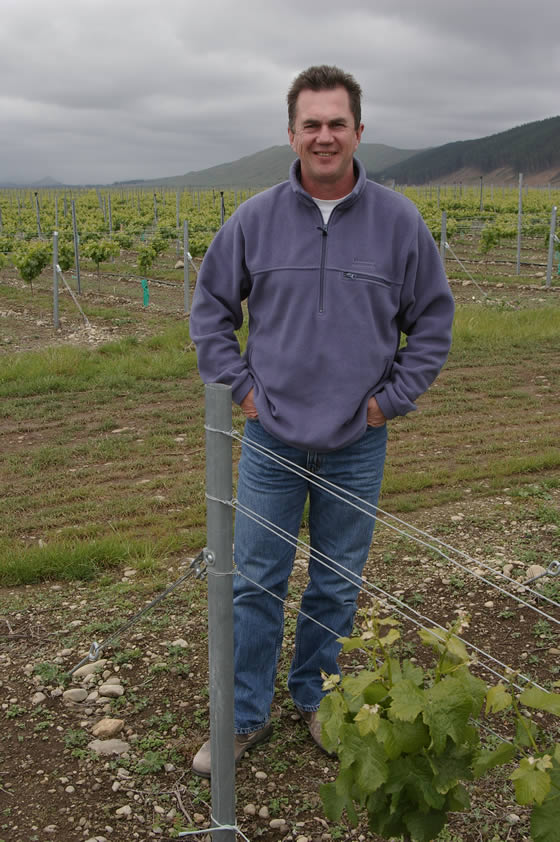
first stop in Marlborough was with Dr Damian Martin (below),
who heads up an interesting new venture called Winegrowers of Ara.
Damian isn't your typical NZ winemaker. He studied winemaking in
Bordeaux and developed a fascination with the science of terroir.
'I got to know what was fact and what was embellished', recalls
Martin. 'I also got to know the ins and outs of the regulation of
appellation systems'. After his studies, he was faced with a
choice: to stay in Europe, or head back to the home country. 'I
always thought there was more opportunity in New Zealand once I
finished studying, but also the opportunity to do something
different by creating an origin brand', says Martin.
So
what precisely is an 'origin brand'? According to Martin, it’s a
wine brand that (1) reflects its location; and (2) combines the
philosophy of how things are done. 'I learned that the human
component is just as important as the physical characters of the
site’, he continued. ‘The way things are done influences the
product as much as the soil type and the climate'. So this is a
fresh vision of terroir, where the way of doing things, itself
based on an underlying philosophy, is combine seamlessly with
characteristics of the wine that stem from its location (which is
the traditional view of terroir). Martin is trying to put ideas of
terroir and appellation into a modern framework, and also a
business model.
When
Martin returned to NZ after his studies he went to work for
Corbans, a company that was subsequently purchased by Montana. He
still had the dream of creating a new venture, but needed a
property to go with it, and was looking for a unique piece of land
in Marlborough. When the time came to begin the Ara project, he
had such an ideal property in mind, which was one that he'd
visited with Corbans in late 1999.
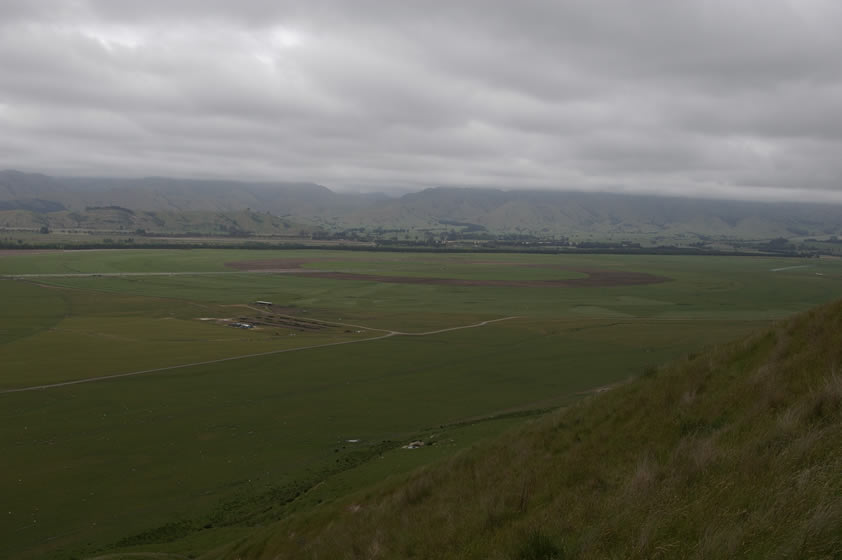
The
site in question (above) is basically an entire river
terrace at the meeting point of the Waihopai and Wairau rivers,
and is a huge patch of land. It’s around 1600 hectares, and
along with this Ara also own 1000 adjoining hectares of hill
country, but this is too steep for viticulture. Dryland farmed
until late 1999, the previous owner had secured water rights but
didn't have the capital to make use of these. When Ara bought it,
there were no vines planted. The reason Martin thought this could
be 'it' is because it was a single land form, different to
anywhere else in Marlborough and with the terrace at higher
altitude than other Marlborough sites.
‘The
terrace formed after glaciation’, explains Martin. ‘The
geology in NZ is active, and large terraces tend to get eroded or
re-covered in sediment. This terrace has been protected sitting on
the main Wairau fault line at the junction of two plates.’
Apparently, the soil is older than most of the others in
Marlborough: the whole region has an alluvial gravel base, on top
of which there is a light icing of silt. This gravel was laid down
by the Wairau river, and the youngest soils tend to be gravel with
sand, with relatively little fine material. They tend to be
fertile with low water holding capacity. Here the age has leached
the soil and it's a little less fertile, but the presence of clay
and other fine material gives the soil good water holding
capacity. The weathering in Marlborough goes down 1 metre, which
compares with the 5 or 6 metres of weathering you'd typically find
in the Rhone.
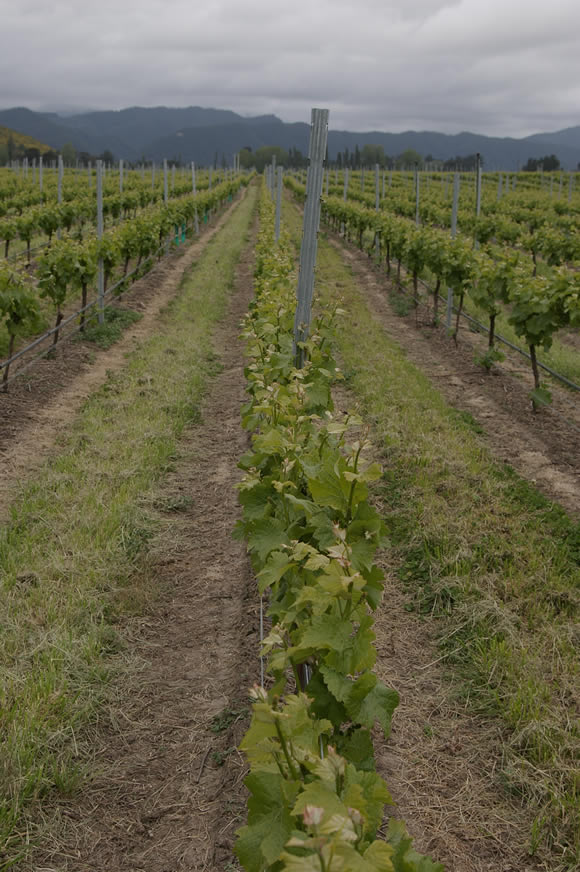
Given
his French roots, Martin does viticulture a little differently to
his neighbours. The density of planting here is 5000 vines
hectare, compared with the 2000 per hectare typical for
Marlborough. Spacing of rows is 1.6 × 1.5 metres, which compares
with the typical row width of 2.4 metres. In the early days in
Marlborough 3 metre row width was common, but few people use this
now. Martin adds that in Europe the typical planting density was a
massive 25 000 vines per hectare, which only changed when vines
began to be planted in rows, in which case the row width was
determined by the width of a horse or cow, at about 0.9 metres.
The 3 or 3.5 metre row width commonly found in the new world was
because many of the people planting already had tractors which
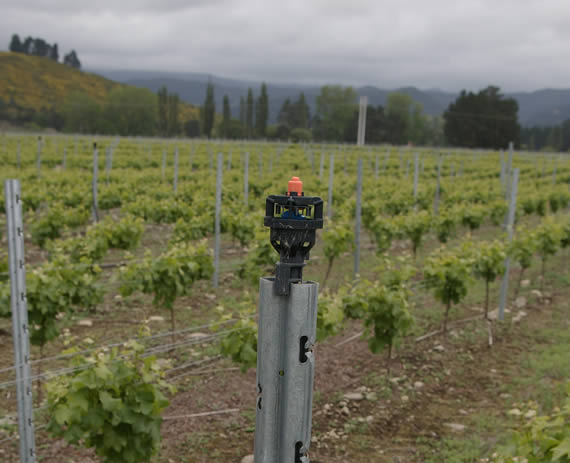
necessitated this spacing. Irrigation of the vineyard is through
spray heads, which is also the method of frost control –
essential for this site. To power the spinklers, Ara have a large
lake and pumping station, which has four monster 600 hp motors
that can each pump 600 litres per second.
The
vines are cane pruned with 2 canes of nine buds left on each vine
at pruning. ‘By the end of Spring I’ll have 390 hectares under
vines, in 180 different blocks whose size is determined by soil
variability’, says Martin. He gets good within-block uniformity.
‘I’d like to think that in small parcels we'll start to make
something pretty special.’
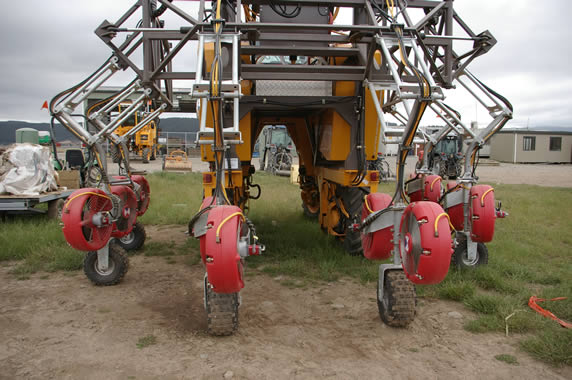
Six-headed
spray rig mounted on a mechanical harvester
Composite
Sauvignon Blanc 2007 Nicely
refined aromatic nose is a little green but not too in-yer-face.
The palate is quite broad and elegant texturally with rounded
fruity character. Nicely savoury with a grapefruity freshness and
stone fruit/white peach characters. Very impressive. 90/100
‘We're
trying to build a wine that has both an aromatic component and
also nice texture,’ explains Martin. ‘The blending process is
about texture and maximizing aromatic lift. We have played around
with some hand-picked whole bunch pressed wine and also some
warm-fermented components’. (12–14 °C is normal for
Marlborough; Martin has done a bit at 18–20 °C.)
Composite
Pinot Noir 2006 The
first vintage of this wine. Attractive nose of dark cherry and
blackberry fruit is fresh with a hint of coke/chocolate. The
rounded palate has a savoury, spicy edge to the bright fruit. It
isn't just about primary fruit, though: there's some complexity,
too. 20% of this was aged iin new oak. 91/100
Ara
Resolute Pinot Noir 2005
First crop Pinot from a special block. Fantastic sweet dark fruit
nose with a bit of spiciness. Really refined and quite complex.
The palate is smooth and elegant with intense dark fruits. It is
quite rich but still elegant, with some tarriness from the oak.
Hints of earth, too. 91/100
‘It’s
pretty unexpected to get a wine like this from the first crop’,
remarks Martin.These are interesting wines, and while it seems quite brave
to be embarking on such a large-scale project in a frost-prone
area that hasn't yet proven itself, these initial wines suggest
that Ara could have a bright future indeed.