|
The
David Hohnen interview
The man behind
Cloudy Bay and Cape
Mentelle makes a fresh start...
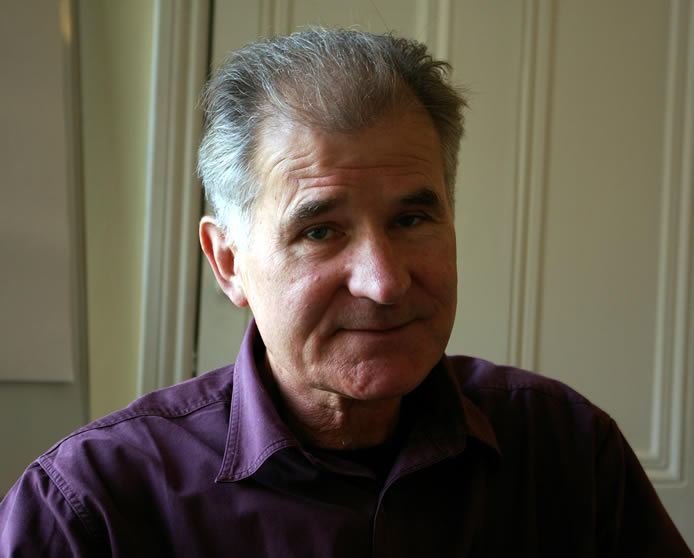
David Hohnen isn’t a
terribly extrovert person. He comes across as quiet, and quite
guarded: he’s not the sort to dominate an interview, nor to seek
to direct its course. This is quite surprising, considering what
he has achieved in his career to date. Not only was he one of the
pioneers in Western Australia’s Margaret River region, but he
also had a big hand in promoting New Zealand Sauvignon Blanc to
the world by founding the iconic Cloudy
Bay winery in the mid-1980s. Now he’s spending his time
farming (sheep and a few pigs), as well as helping his daughter
Freya with the new family winery, McHenry Hohnen. I caught up with
him in Margaret River, and then a couple of months later in
London, to get a better picture of this significant player in the
antipodean wine scene.
We began by discussing the
current state of the Australian wine industry. David is proud of
what Australia has done, but thinks that the industry must now go
through a further stage of evolution. ‘Australian wines have
been in the UK for 20 years, and we’ve done a great job
demystifying things. We took wine out of the clubs of St James’
and stuck them on English working men’s tables, without the
erratic quality of wines from Europe and at prices they could
afford', explains Hohnen. 'What we are doing now is showing that
we have the equivalent of the Bordeaux and Burgundy experience
with small, regionally based estates.’
By planting its first vines
in 1969, Cape Mentelle
was one of the pioneers in the Margaret River region of Western
Australia, although the first wines weren’t marketed until 1976.
It was a collaborative effort between three families in Margaret
River, including the Hohnens, who put land together to form a
farm, and the vineyard was a small part of this. After doing a
course in Fresno, California, David returned to plant another 12
acres in addition to the three acres of vines that were already
there. But financial difficulties meant that he had to go off to
Victoria to work at Taltarni. His brother returned from Vietnam to
look after the vineyard in his absence, and then David returned to
do the 1976 vintage, the first commercial release.
David describes the Cape
Mentelle launch as being like ‘crawling along on elbows on
broken glass’. ‘It was tougher than most people can
imagine’, he recalls. ‘We were perceived as being too
expensive by the local market. We couldn’t sell the wine. It
wasn’t until we got recognition from the eastern states that
people would buy it locally.’
Some history is in order
here. The first to plant in Margaret River was Dr Tom Cullity at
Vasse Felix, in 1967. He was ahead by two years of the next group:
Kevin Cullen and
Bill Pannell (both doctors from Busselton), and then came Cape
Mentelle.
There was an awakening of
interest in table wines in Australia, and Harold Olmo from
University of California Davis came out to try to identify cool
climate regions. He spotted Mount Barker, and Forest Hill was the
first winery there in 1966. As a hobby, lupin breeder John
Gladstones had been studying climate and wine, and he picked
Margaret River. On the back of Gladstone’s report, Cullity, who
lived over the road from David’s parents in Perth, decided to
plant a vineyard. David’s dad was one of the first on
Cullity’s mailing list, and brought home some extremely acidic
Rieslings: the grapes had to be picked early before the birds got
them.
Birds were a major issue in
the early days of Margaret River. ‘There have been two main
developments in viticulture in Margaret River’, says Hohnen.
‘The availability of bird netting, and cheap wire and posts for
trellising’. He describes some of his experiences with losing
crop to birds as ‘distressing’, and recalls that, ‘You
couldn’t hear for the screaming little silver eyes [the birds
who did the damage]: it was just awful. Three years out of five we
lost a lot of crop.’ These silver eyes are small birds that
cause damage by pecking a hole on every berry in a bunch. Then an
Aussie entrepreneur went to China and visited some fishnet
factories and sourced affordable netting that could be used in the
vineyards. ‘Now Margaret River is an ocean of netting at harvest
time’.
Before netting was widely
available, growers were forced to pick early. Hohnen speculates
that netting may have been one of the factors behind the brettanomyces
outbreak that hit the region, beginning in 1988. As growers were
able to leave grapes to hang for longer, they’d be working with
musts richer in phenolics and with lower pH, both of which can
increase the risk. He also speculates that brett may have come
down from the Swan River region on some grapes. Another
contributory factor was the widespread ignorance of the issue.
Most textbooks had very little on brett, and analytical tools were
limited to plating and culturing, which is time consuming. The
common wisdom, he recalls, is that as long as you had adequate
sulphur at bottling, any brett present wouldn’t bloom in bottle,
which he now describes as ‘bullshit’. ‘That’s why we all
got whacked,’ maintains Hohnen. Cape Mentelle had to pour away
their 1997 Cabernet, and the two subsequent vintages were also
affected. ‘On the basis of the initial 1988 experience, we
contacted Mondavi and looked at their protocol’, he recalls.
‘It was basically about hygiene. We were waiting for brett, but
it still got us.’ He thinks that the barrels are all important.
‘We import one, twice or three times used white Burgundy
barrels, and we sterile filter at bottling. This was controversial
at the time because the anecdotal evidence was that it knocked the
wine around, but we know that the wine comes back. We love our
high pH and low acidity, and we don’t want to lose that.’
The next big thing for
Hohnen was Cloudy Bay, the iconic Marlborough winery he started
that, to this day, is still producing the definitive example of
Marlborough Sauvignon Blanc. In 1983 there was a technical
conference in Perth. Some Kiwi winemakers came down to Margaret
River to taste a bit from barrel, and left some bottles of
Sauvignon Blanc: Hohnen was amazed by the wine. ‘It was a bit
sugary sweet, but the aromatics were amazing’. In 1984 he
visited New Zealand to see for himself where these remarkable
wines had come from, attending the Auckland wine show. There he
met Kevin Judd, who was then working for Selaks. Determined to go
ahead with his own Marlborough winery venture, Hohnen raised
Aus$1million in finance, at a crazy interest rate of 23%. Within a
year, the bank he had borrowed from was broke, so he refinanced.
1985 was the first Cloudy Bay: 40 tons of grapes were purchased
and the wine was made up in Gisborne. In 1986 Judd constructed a
winery and they signed up for 120 tons a year from Corbans. The
ball was rolling.
But despite the evident
success of Cape Mentelle and Cloudy Bay, Hohnen found himself a
bit dissatisfied. ‘The company had become huge’, he says,
‘and I’d given away all the jobs I liked doing’. He found
the role of CEO somewhat stressful, and made a plan for exit in
2000 when Veuve Clicqout bought the venture. He stayed around for
three more years then left. ‘I never regretted it for one
minute’, says Hohnen, who officially quit Cape Mentelle in 2003.
With vineyards already in
the family, offering a wonderful resource in terms of sites and
varieties, it seemed daft not to start his own venture. In
addition, Hohnen’s daughter Freya had completed her winemaking
studies, and he ideally wanted to do something with her. He
describes her as a ‘good down to earth girl, and a good
taster’, and points out that she came top of the class in her
oenology course. However, it took a few years for Freya to decide
whether or not to work with her father: she had spells working at
Vasse Felix and then Voyager Estate before deciding to commit
herself to the family business.
This brings us to the
present. McHenry
Hohnen is a joint venture, split 50/50 between David and
Murray McHenry, Hohnen’s brother in law. McHenry made his money
from a pub in Perth, and the winery that is still in construction
phase, although ready enough for the 2007 vintage to be done
there, is on the Rocky Road Vineyard site that McHenry owns.
Between the two of them, they have four vineyards, three south of
Margaret River (including Rocky Road), and one near to Cape
Mentelle. In 2007 140 tons were processed at the winery. It’s
officially licenced to crush 500, but Hohnen says he won’t grow
faster than the market will permit.
You’d have thought that at
this stage in his career, Hohnen would have been tempted to take
things easy, and live a quiet life on his farm, without the
distraction of launching a new medium-sized winery. But he’s
clearly not finished yet, and after tasting
through the McHenry Hohnen range, I’d say that these wines
have something fresh to say; they’re rather unlike the wines
being made in the rest of the region, with a distinctly European
elegance to them. I don’t predict that they’ll have quite the
impact that Cloudy Bay had—after all, success stories like this
usually only come around once in every generation—but if there
are enough drinkers who admire expressivity, food compatibility
and understatement over raw power, the McHenry Hohnen wines should
have a very bright future.
Interview:
April and September 2007, published December 2007
Back
to top
|