|
Margaret
River, Western Australia
Part
4:
Cullen
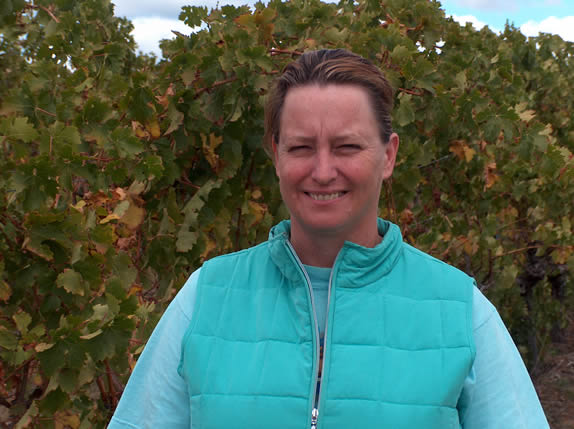
The next stop was Margaret River pioneer Cullen, where
I was to meet with MD Vanya Cullen (pictured above). It was
founded by Vanya’s parents, medical doctor Kevin Cullen and his
wife Diana, who first planted a quarter of acre of vines at the
current site in 1966, as an experiment.
It was the publication in 1965 by Dr John Gladstones of
a famous paper (J. Gladstones, ‘The climate and Soils of South
Western Australia in Relation to Vinegrowing.’ Journal of
Australian Institute of Agricultural Science, December 1965) which
first led the Cullens to plant a trial quarter acre of vines in
this previously unplanted area. This followed a public meeting
convened by Kevin Cullen to bring together people with an interest
in growing wine in the area for discussion. They were assisted by
Bill Jamieson, the State Viticulturalist. Vanya showed me one of
his letters, dated 13th July 1966, in which he gives advice on
establishing this initial vineyard.
Encouraged by this experiment, and the success of
others such as Dr Tom Cullity of Vasse Felix, who was the first to
establish a commercial vineyard in the region in 1967, the Cullens
planted 7.7 hectares of Cabernet Sauvignon and Riesling on what is
now the Cullen Vineyard in 1971. Other varieties were added in
1976, and then Sauvignon Blanc in 1988.
Establishing a successful commercial vineyard was hard
work. Kevin was busy with his medical practice in Busselton, which
was needed to finance the vineyard. But as well as the vineyard
and his medical practice, he had six children and a 2000 acre
sheep and cattle farm to worry about. In 1976 the Cullens sold
their Busselton home to raise capital, and it wasn’t until 1994,
the year of Kevin’s death, that the vineyard broke even for the
first time in 23 years.
As well as being a Margaret River pioneer, Dr Kevin
Cullen also established the famous Busselton Health Study (http://bsn.uwa.edu.au/),
which is one of the longest running epidemiological studies
anywhere, in 1966. Today, 10% of the sales of one of the Cullen
wines is given to fund this study.
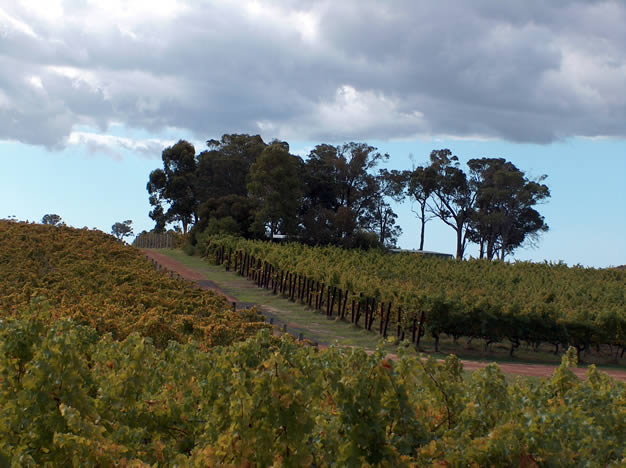
There are two vineyards, Mangan and Cullen, and
altogether 15 000 cases are produced. Recently, the focus at
Cullen has been on improving the viticulture to make it more
sustainable. ‘It’s all about the soils’, says Vanya, ‘so
in 1998 we committed to organics’. Cullen began working with
cover crops and composts, and in 2003 achieved organic
certification with the biological farmers association. In the same
year, Vanya went to a biodynamics workshop, and like what she
heard. She decided that biodynamics was the way to go, and
achieved certification in 2005 (again, with the Biological Farmers
Association of Australia).
How has biodynamics made a difference? ‘It’s a
personal opinion’, says Vanya, ‘but I think we have a greater
vibrancy of fruit flavours and more aliveness in the wine. We are
trying to generate a sense of energy from the land into the
bottle.’ A lot of biodynamic practice relies on the timing.
‘We are harvesting on fruit days as much as we can’, she adds.
‘This year we managed to achieve this with 90% of the
harvest’.
 Has
biodynamics cost anything to implement? ‘There are no extra
costs involved’, Vanya reveals. ‘If anything it is cheaper
because we don’t have chemicals in storage sheds’. She adds
that in the last two years they haven’t needed to use any
copper, the traditional biodynamic remedy for mildew. Has
biodynamics cost anything to implement? ‘There are no extra
costs involved’, Vanya reveals. ‘If anything it is cheaper
because we don’t have chemicals in storage sheds’. She adds
that in the last two years they haven’t needed to use any
copper, the traditional biodynamic remedy for mildew.
The low input approach has extended to the winery. We
don’t add anything, says Vanya. There are no yeast or acid
additions. We entered the winery and did some sampling, both of
the recently completed 2007 vintage, and the trickier preceding
vintage. Whether or not the vineyard practices are responsible, on
the basis of this tasting Cullen seems to be on top of their game.
The wines are brilliant.
Two Sauvignon 2007 samples, one from Cullen and one
from Mangan, were quite different but very good.
2006 Mangan Merlot/Malbec/Petit Verdot was rich,
generous and full with nice elegant fruit. Smooth, dense, stylish
and elegant.
2007 Semillon: Rich, fresh style with plenty of weight
and good acidity
2007 Chardonnay: lovely fruit and good acidity.
2006 Chardonnay: this variety does early budburst so it
gets hit hard by variable weather. In 06 they lost 80% of crop
because of strong wind at flowering. But what was left turned out
well: this is rich, expressive, vibrant with nice toasty
complexity and a nice savoury minerally edge. 91–93/100
2007 Pinot Noir: Harvested at 12/5% this is a nice pale
colour with lovely elegant sweet fruit. Bright, sweet
fresh strawberry and cherry fruit palate. Very stylish and
delicious. Naturally fermented. 90+
Merlot 2007: Fantastic fresh cherry and blackcurrant
fruit, with a bit of herbiness. Bright, spicy, fruity palate with
some structure and a nice spicy finish. Quite serious.
2006 Cabernet Sauvignon: Vibrant, full-on black fruits
with a savoury, spicy tannic structure. Chunky and very good.
2006 Merlot: lovely leafy, gravelly nose leads to a
palate with good density and a savoury tightness.
2006 Malbec: dark coloured, wild and complex with a
nice spiciness.
2007 Cabernet Sauvignon: dense and tannic with lots of
fruit: spicy, gravelly and dense.
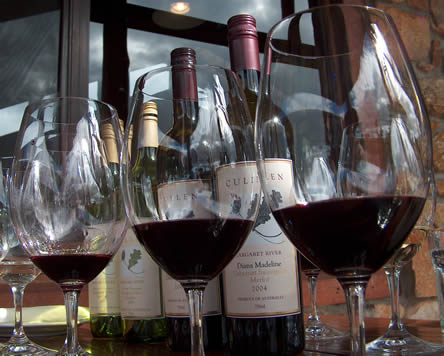
We then lunched at the Cullen’s lovely restaurant,
and tried some bottled wines.
Cullen Mangan Sauvignon Blanc/Semillon 2006
Smooth, fresh, balanced white with a bit of grassiness and
tight acidity. Focused and pleasant. 89/100
Cullen Cullen Vineyard Sauvignon Blanc/Semillon 2006
Open nose with a herby edge. Much fuller and richer
than the Mangan, with sweet rounded fruit. 89/100
Cullen Chardonnay 2005
Rich, open nose is quite complex. Bold, full flavoured,
rounded palate. Nutty and rich with lots of ripe fruit and good
spicy complexity, together with some attractive minerality. Sylish.
93/100
Cullen Mangan 2005
A blend of roughly equal amounts of Malbec, Merlot and Petit
Verdot. Deep coloured. Lovely forward black fruit characters on
the nose with a tight savouriness. Spicy and dark. The palate is
concentrated and full with wonderful rich, sweet dark fruit backed
up by spicy tannins. Bright and fresh with good acidity. A
thought-provoking wine. 92/100
Cullen Diana Madeline 2005
Three-quarters Cabernet Sauvignon with the remainder made up
of Merlot and a dribble of Malbec, Cabernet Franc and Petit Verdot.
Complex, dark, smooth nose is fresh and pure with a bit of
spiciness. The palate has bold, sweet blackcurrant fruit with
dense spiciness and plenty of structure. It is concentrated, bold
and brilliantly balanced – a serious, ageworthy effort. 94/100
Cullen Diana Madeline 2004
Pure, sweet blackcurrant fruit nose with a lovely sweet,
subtly herbal leafy aromatic edge. The palate is ripe, pure and
smooth with lovely elegance and nicely poised blackcurrant fruit.
It’s drinking very well now but it will go the distance. 93/100
Wines tasted 04/07
Find
these wines with wine-searcher.com
Back
to top
|