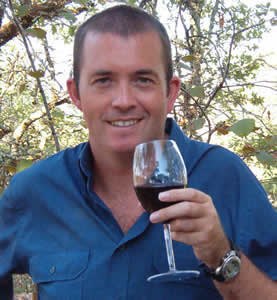
The
book
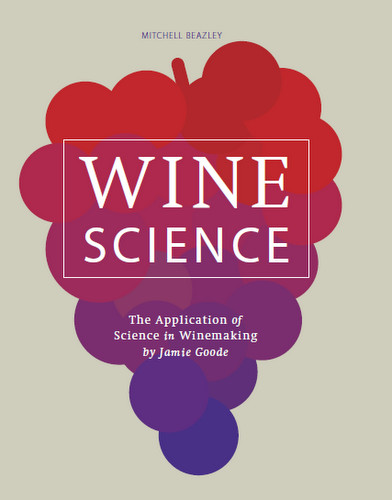
As
wine producers increasingly turn to science to make their wines more
consistent and
profitable, there is considerable and continuous international exchange
of scientific information, ideas, and techniques. This brand new book is
the only in-depth reference to detail the processes, developments, and
factors affecting the science of winemaking. Jamie
Goode, a highly recognized expert on the subject, skillfully opens up
the complex subject of wine science to explore the background of the
various processes involved and the range of issues surrounding their
uses and applications.
The
book is divided into three sections covering the vineyard, the winery,
and the human interaction with wine. Within each section are chapters
that explain in detail the practical applications of science in
winemaking around the world, as well as identifying the key
considerations, such as viticultural practices, organics and ecology,
and lifestyle influences.
Goode
also reports on the vital progress that has been made in the last
decade. Written in a uniquely accessible style, the book also features
over 100 illustrations and photographs to help make even the most
complex topics clear, straightforward, and easy to understand. This
revolutionary book offers key reference for winemakers, viticulture and
oenology students, and anyone with an interest in
science or agriculture.
How
to buy the book
|
Wine
science articles
-
Is rising atmospheric CO2 to blame for higher alcohols in wine?
Jamie Goode assesses an interesting new theory
-
Polyphenols and phenolic
compounds in wine: a review of this important group of wine
chemicals
- Whole
bunches and the use of stems in red winemaking
Jamie Goode digs deep into the newly trendy use of stems in red
wine fermentations
- Research
at Château Margaux
Paul Pontallier presents findings from in-house research at this
Bordeaux first growth, looking at closures, farming methods and the
role of stems in winemaking
- Carbonic
maceration
What exactly happens during this red winemaking process?
- What
have the scientists done for us?
Jamie Goode looks at the advances in wine science over the last
20 years
- Visiting
the AWRI
The Australian Wine Research Institute in Adelaide is one of the
top wine science institutions. Jamie Goode reports on a visit
- Mercaptans
and other sulfur compounds in wine
Volatile sulfur compounds and 'reduction' are hot topics at the
moment. Jamie Goode does some explaining
- GM
yeasts: the next battleground
ML01, a genetically modified strain of wine yeast, has been
released commercially in the USA. Good or bad?
- Brettanomyces
The rogue yeast that's a hot topic in the world of wine
- Naturalness
in wine
It's possible to make
a wine without adding anything, but virtually no one makes wine this
way, for good reasons. Jamie Goode asks, how much manipulation is
acceptable?
- Is
there an art to wine science?
- Tannins
An in depth look at these important wine compounds
- The
New Zealand Screwcap Initiative
In New Zealand, the
shift to screwcaps has taken place with startling speed: from a
standing start in 2000, now 70% of this country's wines are sealed
this way.
- Mechanisms
of terroir
As more new world
producers start to take an interest in terroir, scientists are
turning their attention to defining it and explaining how it affects
a wine. Jamie Goode investigates.
- Reductionism:
how useful is this for understanding wine?
The driving philosophy
behind many scientific advances has been reductionism - the idea
that a system is best understood by taking it apart and studying the
components. But is this approach limited for helping us understand
wine?
|
|
| Reviews
Tim
Atkin in The Observer
observer.guardian.co.uk/magazine/story/0,11913,1663837,00.html
Wine Science by Jamie Goode (£30, Mitchell Beazley) *****
(One of only two books in Tim’s line-up to get five stars)
'This isn't the cheapest wine book on the shelves, and its paucity of
illustrations gives it a rather forbidding, academic look. But to a
scientific ignoramus like me it's the most useful book of the year,
packed with fascinating, well-researched information about everything
from genetically modified vines to wine allergies, cork taint to
micro-oxygenation. Goode is a rarity - a scientist who knows how to
explain his subject in an approachable way.'
Andrew
Jefford in The Evening Standard
'Jamie Goode’s Wine Science (Mitchell Beazley, £30) is less
diverting but more technically detailed. Goode has a PhD in plant
biology complemented by an invaluable training as a science editor, and
has no rival at all among wine writers in terms of his grasp of the
science underlying wine production. He puts it over in terms even I can
understand, so you will have no trouble at all. The results,
surprisingly, can be juicy as a good Juliénas.'
Eric
Asimov in the New York Times
‘Finally, while wine producers love to portray themselves as
humble artisans, winemaking these days is a complicated process that
cannot always be understood intuitively. Fortunately, Jamie Goode's new
book, The Science of Wine: From Vine to Glass
(University of California Press, $35, available next month, explains
some of the terms that critics toss around, like reverse osmosis and
cane-pruning, while asking (and trying to answer) common-sense
questions, like how much manipulation is acceptable in winemaking and
whether a wine can taste like minerals. These could be dull topics, but
Mr. Goode manages to make them lively and provocative’
Joanna
Simon in The Sunday Times
Wine: Tips for tipplers
Joanna Simon raises a glass to some authoritative tomes, a witty
stocking-filler and a memoir from Hugh Johnson in her selection of the
year’s best books on drink.
WINE SCIENCE:
The Application of Science in Winemaking by Jamie Goode
Mitchell Beazley £30
Should he ever need to, Hugh Johnson could use this book to support his
view that tasting notes citing all sorts of fruits end up being
meaningless. Studies show that even experienced tasters can’t detect
more than four odours in a mixture. Fortunately, as a wine writer
himself Goode cannot afford to be too hard on us scribes: we write
tasting notes because “it’s the best we can manage, so it will have
to do”. Quite so. This scholarly yet accessible work is an invaluable
source for the technicalities of vineyard, winery and tasting.
Anthony
Rose in the Independent
Raise a glass to the future of wine
By Anthony Rose
‘Since time immemorial the natural bloom on the grape kick-started
fermentation and lo, with a bit of intervention to stop it souring into
vinegar, we had wine. Today, as white-coated boffins bring problems of
oxidation, volatile acidity, reduction and cork taint within their
sights, science is moving into the realms of science-fiction. The
Portuguese have developed robot treaders to replace human beings. In
France, where genetically modified crops are derided by protesters as
Frankenfoods, experiments have been authorised for GM vines to halt the
spread of the fanleaf virus that attacks vine roots. A biotechnologist
at Stellenbosch University claims GM wines might prevent hangovers. In
the cellar, sulphur dioxide (to neutralise bacteria), filtering and
cooling technology are part and parcel of the modern winemaker's bag of
tricks. If a wine is over-alcoholic because of a new vine clone or yeast
strain, technology can ride to the rescue in the form of
alcohol-reducing methods such as reverse osmosis or spinning cone
technology. Jamie Goode's
recently published, stimulating and highly approachable Wine
Science (£30, Mitchell Beazley) will explain all.’
|
|