|
Lower
alcohol wines
A new retail category?
It’s often stated that
there is a need for more innovation in the wine category, but
actually realizing this can be problematic in an area of the drinks
industry where tradition is so important, and so many rules surround
its production. Now, however, technology and consumer demand have
come together to create the potential for an entirely new category
of wine: reduced alcohol table wines that (in theory at least)
should taste every bit as good as their full-strength peers. This
new category is being pioneered by Californian company TFC Wine and
Spirits, who are an off-shoot of Conetech, a Californian company
specializing in alcohol reduction.
Conetech use a technique
called the spinning cone column, which fractionates wine, making it
possible to remove alcohol separately from other volatile
components. Currently, they treat wines from around 600 clients
worldwide, and last year treated 6 million gallons. However, because
they only treat a small proportion of each wine— around 10%—
which is then back-blended, around 50 million gallons of wine will
have been alcohol-reduced in this way. As well as a plant in
California, Conetech also have plants in Chile, South Africa and
Spain. The Spanish plant isn’t yet working on wine, because of
European regulations, but instead is focusing on non-alcoholic
products which this technique is also used for.
In recent years, alcohol
levels in wines have crept up as winemakers have looked to work with
riper grapes, which give the sorts of flavours that consumers
prefer. This has led to protests and a call for wines with lower
alcohol levels. David Stevens, head winemaker with TFC, says that
‘it’s not enough just to talk about less alcohol. People drink
wine for pleasure, and as a winemaker I’ve always insisted that we
at TFC offer something that’s delicious to drink.’ The TFC wines
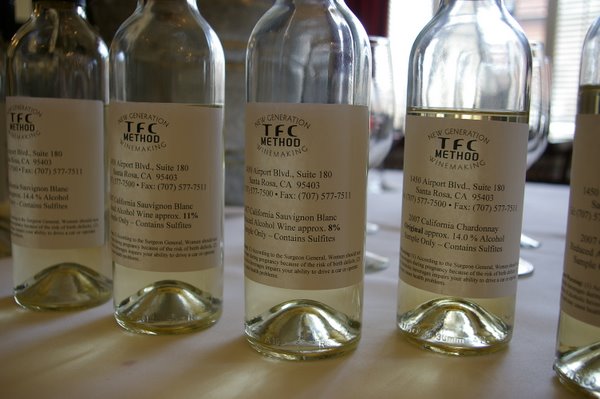
are adjusted down from initial levels of 14% to 11%, 8% and even
5.5% alcohol with the spinning cone column. ‘I’ve always
rejected the conventional ways of making light wines,’ says
Stevens, citing adding water or picking grapes earlier. ‘Wines
crafted in a lighter style must be every bit as well balanced and
have as much complexity of flavour as any other premium wine.’

TFC's David Stevens
So how does the column work?
It contains around 40 upside down cones, half of which are fixed and
half spin. In a vacuum environment, the cones spin the wine into
thin liquid films, and a cool vapour rises off the wine, carrying
the volatiles from the liquid. In the first pass, the ultra-light
component consisting of the delicate flavours and aromas is carried
off and condensed. This is known as the ‘essence’, and it is
saved for later, to be recombined with the wine. The second pass
takes off as much alcohol as you want to remove. Theoretically, you
could then recombine the remaining low alcohol wine with the essence
and the alcohol and end up with the same wine you started with.
The other technique
currently used to reduce alcohol is reverse osmosis, which is a type
of filtration system. It’s complex to explain in brief, but it
works in a similar way to the body’s kidney: while conventional
filtration systems have their flow blocked by the filtration
membrane, which becomes clogged, here the flow is tangential to the
membrane, which helps prevent the pores becoming blocked, although
it requires a much larger membrane surface. It’s also known as
‘cross-flow’ filtration The consequence of this is that you need
lots of very long filtration tubes all bundled together for reverse
osmosis, making the system expensive compared with standard
filtration systems, although it is still portable and very much
cheaper than the spinning cone column. The cost of the spinning cone
machine is around US$1 million, whereas a reverse osmosis machine
costs around US$30 000 and is small enough to be moved around,
making it possible to do alcohol reduction in the winery.
The rules are currently a
problem for this sort of technology. In the USA spinning cones have
been authorized for alcohol reduction, but in Europe this technique
was until recently only allowed on an experimental basis. This meant
that you were allowed to treat 50 000 hectolitres, but it can’t
leave the country of origin. However, in November 2008 the rules
were changed, making a 2% adjustment of alcohol legal, as long as it
is declared. But reducing alcohol in this way may not be permitted
under some specific AOC regulations in France (and presumably other
appellation specific regulations in other countries). The rather
different local rules make this a confusing area to operate in.
Exporting an alcohol-reduced
wine from a country where this is legal, such as the USA, to the
European Union can be problematic. In the UK the regulations are
overseen by the Wine Standards Branch of the Food Standards Agency,
which is staffed largely by ex-policemen, who enforce the rules
rigidly and who don’t necessary have expert technical wine
knowledge. The legal definition of wine is that it has to have 9%
alcohol. However, there are loopholes for traditional styles such as
Asti and Mosel wines that have lower alcohol. Also, if the wine
comes from California, it can have 7% alcohol and still be called
wine because of a reciprocal agreement. However, the lack of clarity
to the rules makes working with these sorts of wines problematic.
‘When you are a pioneer in the industry you run into some
bushes,’ says Stevens.
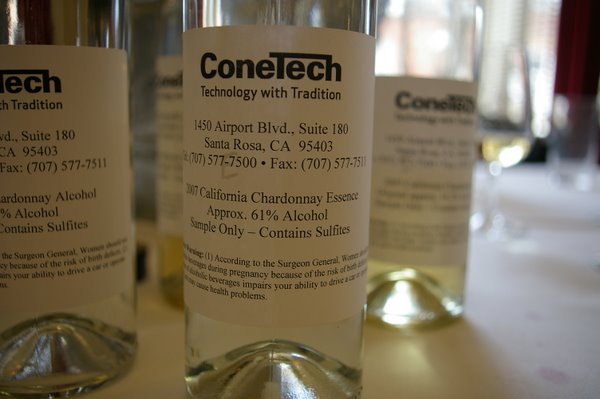
How does the Conetech
process work? You might have a Chardonnay at 14% alcohol. You take
10 000 litres, which you put through the spinning cone, taking off
first the volatile fraction (‘essence’) and then the alcohol,
leaving you with 8250 litres of Chardonnay at 4% alcohol. You then
add the aromatic ‘essence’ back in, which in some cases may
enhance the wine because you are adding the volatile fraction from
the original wine back to a smaller volume. The resulting 4% wine
can be used as a blending component to add to untreated wine, to
result in a final wine at a lower alcohol level.
How do the wines taste? I
started off looking at a Californian Chardonnay at 14.3% alcohol. It
had a sweet, ripe, slightly buttery nose, leading to a rich buttery
palate that was quite broad. I then tasted the same wine after it
had been through the spinning cone column, at 4% alcohol. This was
more minerally with tangerine notes and some spicy richness. The
palate was lemony and tart with hollow fruit and an enhanced
sensation of acidity. ‘Alcohol is a masking agent,’ says
Conetech’s head winemaker Scott Burr (pictured below), ‘so
taking it away reveals what’s there. It also adds sweetness to the
palate.’ It’s this sweetness that is missing in the 4% sample,
and which exaggerates the acidity.

The next wine was a blend of
10% of the 4% sample with the remainder of the original wine,
resulting in a Chardonnay at 13.2%. This was fresher than the
original with more acidity apparent. The fruit showed through more.
There’s a quite a difference, and the 13.2% wine was much nicer
than the 14.3% original.
Then I tried the alcohol
fraction that comes off the machine. This had a big whiff of sulphur
dioxide, which comes off with the alcohol, and tasted quite sweet
with a nice richness to it. The next sample was the essence
fraction: the aromatic component that’s the first to come off the
column. This had amazing aromatics when it was cut with water:
really citrussy, fruity and estery.
How does a winemaker using
Conetech as a contract provider decide how much alcohol should be
reduced? ‘A big client who we’ve been working with a long time
might specifiy they want their wine at 13.85%,’ says Burr. ‘A
smaller client might say they have a Zinfandel at 16.8% alcohol, so
we do a run, take the 4% component and blend wines at a bunch of
different alcohol levels,’ he says. ‘I don’t tell the client
what the alcohol level should be.’ In terms of which wines are
more successful, Burr says that it is not a curve, but instead there
are sweet spots. ‘There are all kinds of different ones. The more
oak the bigger the variance.’
I then tried four different
Californian wines each at three alcohol levels: the original level,
and then reduced levels of 11% and 8%. A Chardonnay that tasted
sweet and buttery at 14% alcohol tasted fresher with nice definition
at 11%, and then more lemony and refreshing at 8%. A rosé showed
best at 12.2%, and was perhaps less successful at 8%. A Shiraz was
sweet, juicy and spicy at 14.6%, but fresher and more vivid with
less sweetness at 11%; at 8% it was more savoury with fresh, pure
fruit and a more gastronomic character. A Merlot showed really well
at 11% and fresh, juicy and bracing with more apparent acidity at
8%. These are inexpensive wines, but with this alcohol reduction
they really showed very well.
As well as alcohol
reduction, there are also novel uses for the spinning cone, some of
which currently face legal problems. One would be to take the
pressings, add water and acid, and ferment them. Then you could take
the volatiles from this using the spinning cone column and add them
back to the wine, thus enhancing it.
In the UK, Guy Smith of TFC
wines reports that one of the major UK supermarkets is interested in
lower alcohol wines made with this technology. Indeed, as I did the
rounds of the UK supermarket press tastings last autumn, several
buyers expressed interest in these sorts of wines when I asked them.
TFC have done consumer focus groups looking at how people respond to
these wines. ‘Most people don’t like low alcohol products from
experience,’ says Smith, ‘but if you can get them to try these
wines they like them.’ His two pronged strategy is (1) to prove
that the wines work, and (2) prove that there is a market for lower
alcohol wines. He thinks they are especially suited to occasions
where people will be drinking for a long time. One particularly
promising market is women in pubs, where currently a large (250 ml)
glass of Chardonnay will provide more than the daily recommended
alcohol intake. Smith is under no illusions, though. ‘What we
think about the market is irrelevant,’ he admits. ‘It’s what
the consumer says that matters.’
Stevens reveals that TFC
have done a lot of work with focus groups in the UK on these lighter
styled wines with lower alcohol. ‘This work reaffirmed our old
beliefs, but also gave use a lot of new ideas,’ he says. (They
used Nunwood in Leeds, which is also used by Tesco.)
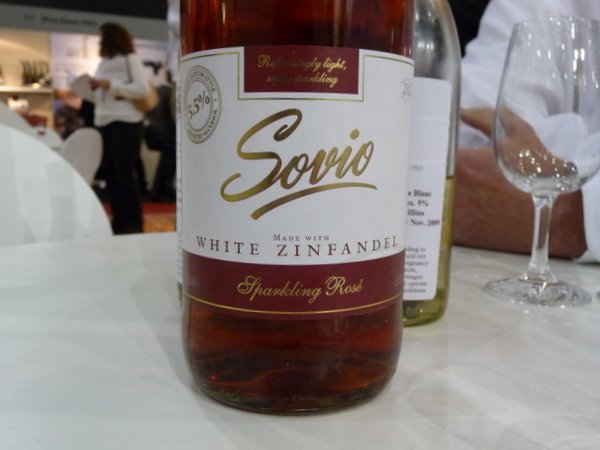
One product made using this
technique is already in UK supermarket Tesco, and is doing well.
It’s labelled as a ‘reduced alcohol wine-based drink’ and is
called Sovio White Zinfandel Sparkling Rosé. Retailing at £4.99
and with 5.5% alcohol, it’s attractively fruity and fresh, with
strawberry, melon and herb notes.
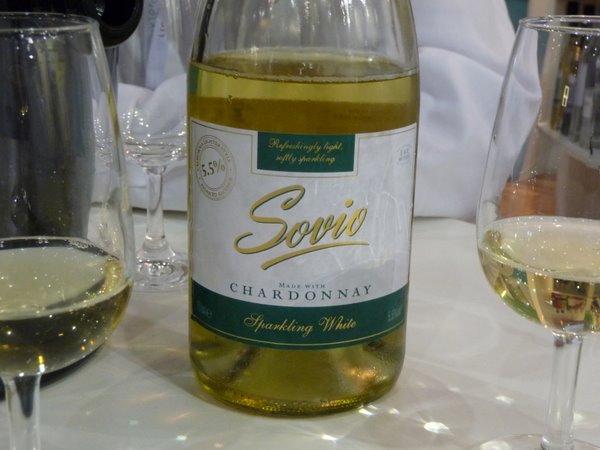
Also in the Sovio range is
Sovio ‘made with’ Chardonnay sparkling white, which is also 5.5%
alcohol. It has sweet fruit, with toasty richness and nice straw
notes. It’s gently sweet and quite tasty.
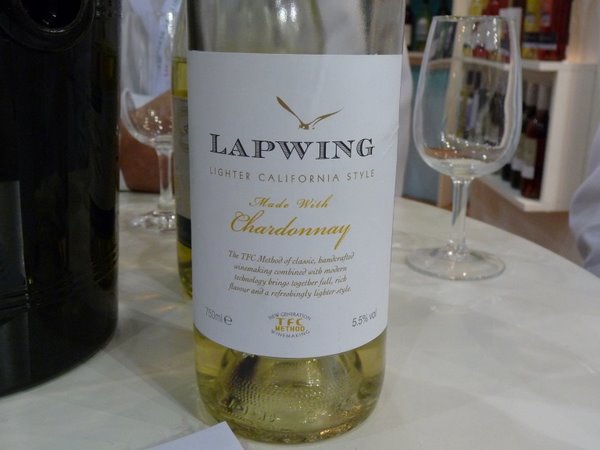
Lapwing ‘made with’
Chardonnay is another 5.5% wine-based drink with a lemony, fruity
nose and a light, fruity palate that works really well. I also tried
a 2008 Rueda that was originally 13.4% alcohol, but which had been
brought back to 9%. This was fantastically fruity and rich with
lovely peachiness as well as some tropical passion fruit notes.
It’s a nice rich white wine that doesn’t stand out as being low
alcohol at all.
For red wines, Stevens says
that there is a natural limit to how much the alcohol can be reduced
by. ‘We can’t go to 5.5% for red wines,’ he says. ‘We’ve
tried it and it doesn’t work.’ TFC’s Touchstone Eight range is
at 8% alcohol. The Merlot is sweet and fruity with a hint of
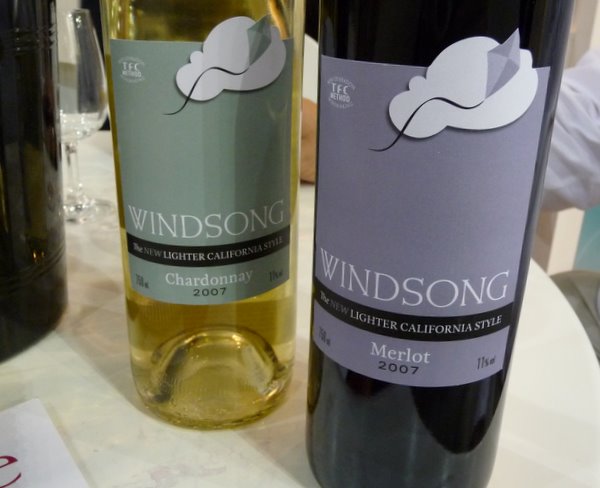
earthiness, and is light, attractive and wine-like. The Windsong
range is at 11% alcohol. I tried the Windsong California Chardonnay
2007 which is bright, fruity and focused with nice lemon and
tropical fruit. The Windsong California Merlot is bright and sweetly
fruited but in a lighter, more fun style with nice acidity. Both
work really well.
Who else is doing this sort
of thing? I’ve been unimpressed by lighter styled, lower alcohol
wines where this has been achieved by picking very early: these
wines seem to lack character. So it seems that the best method for
producing these wines is to make a wine with properly ripe grapes
and then reduce the alcohol. A newcomer here is So’Light, a pair
of wines from Domaines Auriol in the south of France. The range
currently consists of a Sauvignon, Merlot and a rosé, all at 9%,
with the alcohol reduced by means of reverse osmosis.
If the legal hurdles, which
currently are a hindrance and not terribly clear, can be sorted out,
then there looks to be a niche for these sorts of wines. There seems
to be a demand on the part of the consumer for wines that are lower
in alcohol, but which do not compromise flavour. The wines currently
offered by TFC wines taste pretty good: I’d say that they are more
appealing, and perhaps more authentic and food-friendly, than their
untreated counterparts, which suffer somewhat from their elevated
alcohol levels. But what is needed to drag this category from a tiny
niche to a more mainstream fixture in the retail sector is a
concerted push from a major retailer to establish lower alcohol
wines as a genuine category.
Find
these wines with wine-searcher.com
Back
to top
|