












|
The
art of blending
This made me think about the art of blending. On one level,
the classic ‘terroir’ model is to produce a wine from a single
patch of ground that then reflects the characters of the vineyard.
But even in its purest sense, implementing this terroir model will
involve a degree of blending: as anyone who has tasted a particular
wine from barrels before will tell you, there are usually subtle
(and often not so subtle) differences among them. This may have to
do with the nature of the barrel, the course of the fermentation, or
reflect differences between the grapes from various bits of the same
vineyard. Unless the winemaker decides to mix all the components
together, there’ll be some sort of selection involved in blending
the final wine. In many cases, even staunch terroirists will do quite a bit
of work in choosing which components to blend together for the
various wines that are produced from a property. Being able to
predict what the effect of adding two or more rather different wines
together is a real skill. The most able blenders will already be
thinking about the usefulness of certain components as elements in
blend while the grapes are still on the vine: many of the
viticultural choices will be made with this in mind. Beaucastel is an iconic wine from Châteauneuf du Pape, and
I recently had a chance to taste a wide range of different vintages
(including five vintages of the super cuvee Hommage à Jacques
Perrin). Included in this tasting was a sampling of some of the
blending components of the 2003 vintage. Beaucastel is famous for
including all 13 permitted grape varieties in the blend, but these
five varieties tried here form the backbone of the wine (around
85%). These samples
were taken from tank on Monday 8th March and tasted on Wednesday 10th
March, and were tasted with Pierre Perrin: a summary of his comments
are included after my notes. Cinsault (4–5% of the final blend) Counoise (used to be 3–4% of blend, now 10%) Syrah (10% of the blend) Grenache (30% of the blend) Mourvèdre (30% of the blend) The last wine was an assemblage of the five different
varieties, in proportions approximating those in the final blend.
This has a sweet nose showing open fruit with a spicy edge. The
palate is chewy and spicy with a lovely earthiness, firm tannins and
nice structure. Good concentration. Very good/excellent 93+/100 see also: the art of blending part 2: Niepoort Vintage Port 2003 |
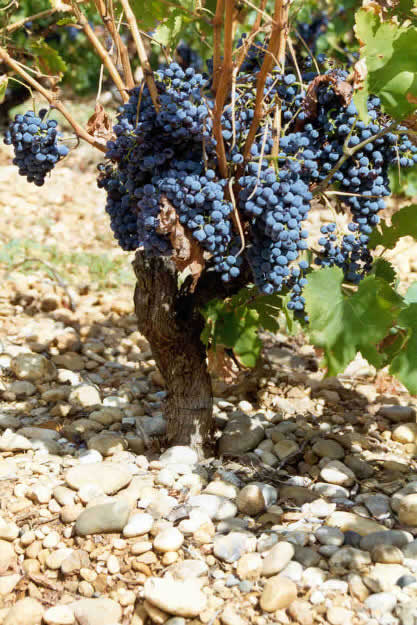 It
seemed a bit of a coincidence to be given a chance to taste samples
of the components of two different fine wines in the space of a
week: first, Beaucastel 2003 – a classic Châteauneuf du Pape –
and second Niepoort 2003, one of the very best Vintage Ports.
It
seemed a bit of a coincidence to be given a chance to taste samples
of the components of two different fine wines in the space of a
week: first, Beaucastel 2003 – a classic Châteauneuf du Pape –
and second Niepoort 2003, one of the very best Vintage Ports.