|
|

Minerality is, for me, one of the most interesting concepts in the world of wine.
‘Minerality’ is a really useful descriptor; many of us use it frequently in our tasting notes. Yet it’s also a term that means different things to different people. I know what I mean when I encounter some characteristic in a wine that makes me think ‘mineral’, but I can’t be sure that when others use the term they are referring to the same thing.
And minerality may well be a sort of syndrome, like some medical conditions, when different underlying factors cause symptoms that look quite similar. I also suspect that it’s sometimes used as a way of praising a deliciously complex wine, in the same way that ‘long’ is often thrown into a tasting note when people really like a wine but have run out of more concrete descriptors.
A recent article by Sally Easton in the Drinks Business rather put the boot into minerality. She quoted the work of Jordi Ballester who has done lexical analysis on tasting notes where people use the term, and found that people mean different things by it. And she also quoted Alex Maltman, an academic geologist, who correctly pointed out that mineral ions are only taken up by vines at very low levels, and that we’d be unlikely to taste them in the wine.
But I think there’s more to be said on the topic.
Frequently, you will see on the side of a bottle of mineral water the different levels of mineral ions present in that water. These depend on the source of the water, and different mineral waters tend to have subtly different flavours if they are compared side-by-side. Presumably, these differences in flavour, subtle as they are, are down to the mineral composition, although there are plenty who will contend that most mineral ions don’t taste of anything.
If a soil has mineral ions in it, these will be taken up by the roots passively along with the water that the roots sequester. However, roots are also able to take up mineral ions selectively in certain circumstances. Some people object that the typical differences in mineral ion concentration, such as those found in different mineral waters, would not be noticeable against the backdrop of the other flavours present in wine. However, the levels present in wine seem to be considerably higher.
‘Minerals can be detected while tasting a wine,’ says Olivier Humbrecht, one of Alsace’s leading winegrowers, famous for his advocacy of biodynamic viticulture. ‘It is the fraction on the palate that makes the wine taste more saline or salty. High acids or high tannins do not mean that the wine has lots of minerality. High salt contents make the acidity more “savoury” and therefore less aggressive. Good minerality makes salivate and makes one want to have another sip or glass or bottle.’
Gerd Stepp, a consultant winemaker, has some interesting perspectives of minerality. He broadly falls into the literalist camp. ‘For me there are two forms of minerality that influence a wine’s qualities and characteristics,’ he explains. ‘Firstly, perhaps most obviously, the wine’s mineral content, which is about taste and texture when tasting a wine. It’s much like when drinking mineral water of a high mineral/salt content, there is a flavour/taste and an almost ‘osmotic’ experience, perhaps similar to drinking sea water, just much less concentrated and less salty.’ Stepp thinks that mineral waters taste differently, and can sometimes even seem a little salty, depending on to source.
Stepp notes that according to his reference books the mineral content of wines fluctuates between 1.5 g/litre and 4 g/litre. ‘It seems the soil’s exchange capacity of ions correlates with the mineral concentration of a wine,’ he states. ‘Also, a cold-stabilised wine has lower potassium content than the same wine unstabilized, and it tastes different and has less flavour, perhaps even less complexity.’
For Stepp, there is also a second form of minerality. ‘I am certain there is an influence on the wine’s flavour characteristics through the geology/soils where the grapes are grown, which correlates to the terroir’s unique minerality,’ he claims. ‘I understand researchers trying to prove that vines don’t actually take up minerals from the soils and that these minerals aren’t in the finished product. But how can it be explained that wines made from the same grape variety, vintage and region have such different qualities depending on the soils? It must have an influence, detectable or not. Also, where would those 1.5–4g/L of minerals come from? But I don’t believe that we just taste the actual minerals from the soils, it is definitely much more complex.’
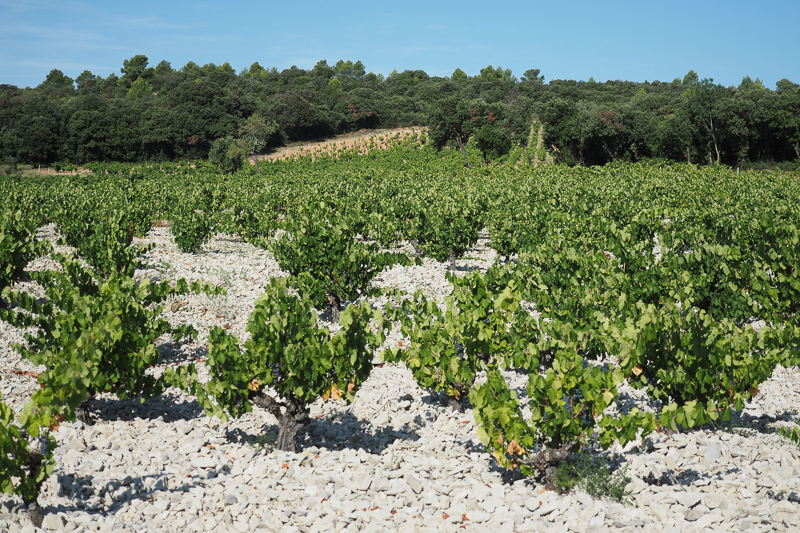
There is a very interesting pair of scientific studies in support of this notion of minerality in wine. Back in 2000, a plant researcher from Germany, Andreas Peuke, grew Riesling vines in pots containing three different soils from Franconian vineyards: Loess, Muschelkalk (sea shell lime) and Keuper. He collected sap from the vines and analysed its chemical composition, and found differences among the different soil types. In Muschelkalk soil, carbon, nitrogen, and calcium were present in the greatest concentrations. Sulfur, boron, magnesium, sodium, and potassium were greatest in Keuper, and the concentrations in Loess soil were intermediate. Aqueous extraction of the soils resulted in a two-fold greater concentration of total solutes in Keuper extract compared with Muschelkalk, and more than threefold than in Loess.
A few years ago, Californian winegrower Randall Grahm carried out some interesting experiments. In his quest to try to understand minerality better, he actually put some rocks into tanks of wine. However, in this case the rocks were in a wine environment at low pH, and are therefore likely to release more ‘minerals’ than if they had been in the ground. And the rocks also had the side effect of raising the pH of the wine, which can change the flavour. ‘Our experiments were incredibly simplistic and gross in comparison to the very subtle chemistry that occurs in mineral extraction in real soils,’ Grahm recalls. ‘We simply took interesting rocks, washed them very well, smashed them up and immersed them in a barrel of wine for a certain period, until we felt that the wine had extracted some interesting flavors and we were able to discern significant differences between the various types.’
Grahm saw major changes in the texture and mouthfeel of the wine, as well as dramatic differences in aromatics, length and persistence of flavour. ‘In every case, low doses of minerals added far more complexity and greater persistence on the palate. It is my personal belief that wines richer in minerals just present way differently.’ He adds that, ‘they seem to have a certain sort of nucleus or density around their center; they are gathered, focused, cohered the way a laser coheres light. It is a different kind of density relative to tannic density, somehow deeper in the wine than the tannins.’
So, I reckon there is still some life in this literalist understanding of minerality. More to come…
Just seen on Twitter: an extract from an e-mail received by a member of Chris Mitchell’s team at CUBE (a leading UK-based wine trade PR and events company), from a wine trade magazine advertising sales person:
We feel that one of the key functions of a PR agency is to gain earned editorial coverage for their client, and since we have such strong numbers and interest online and on social media we have a unique ability to deliver a lot of value to you and your clients in this area. In the ideal world I would like to put our time and correspondence into facilitating the best possible use of the relationship on behalf of your clients, and I would like to ask you and the team to consider what we might be able to do together.
It would be funny if it wasn’t so depressing. You would have to try hard to read this email as anything other than an offer for editorial in exchange for advertising revenue. It doesn’t state this, explicitly, of course, but merely hints and makes suggestions, in a rather ugly way. Terms such as ‘gain earned editorial coverage’, ‘deliver a lot of value to you’, ‘in an ideal world’ and ‘consider what we might be able to do together’ leave little room for doubt.
If media is to have any credibility, advertising and editorial have to be kept separate. Quite simply, the quality of media suffers if this is not the case. There’s a moral side, as well – readers expect coverage to be editorially justified, and for any advertorial to be marked as such. It is dishonest not to stick to these reader expectations. The world of trade media, it seems, is quite a murky one in places.
Whoever is in charge of the publication whose advertising sales team behave like this should be ashamed. But I suspect it’s pretty normal behaviour, sadly.

Just back from football and rehydrating with this beer. Now I like Sierra Nevada’s regular pale ale – it’s one of the beers that kicked off the US craft beer revolution in the early 1980s, and it’s still a best seller – but it’s a tiny bit tame in comparison with the new wave US IPAs.
Step forward their Torpedo Extra IPA. It’s the pale ale, turbocharged with more hops, but not it’s unbalanced. They’ve been making it since 2009, and it’s priced the same as the pale ale, at £1.99. And the good news is that you can buy it in Tesco. Never before has so much flavour been available for so little, to so many. [Perhaps with the exception of Tesco Finest Double American IPA, made by Brewdog, and also £1.99 at Tesco.]
Sierra Nevada Torpedo IPA
7.2% alcohol. Lively, fresh, full-flavoured and complex with notes of pine, herbs, hops, grapefruit and some sweet maltiness. Citrus flavours balance out the sweet malty, toffee notes on the palate, and there’s a long, warm, spicy hoppy finish. Top stuff: intense but balanced. 9/10

To the ancients, the idea that plants are formed from the soil would have seemed self-evident. The communion between the roots and the earth suggests that the composition of plants, and by extension the fruit they produce, is determined largely by the composition of the soil. Modern science, however, paints a rather different picture. The fact that you can produce perfect-looking plants and fruit using hydroponics, where the plant is supplied with just water, light and a solution of 16 trace elements, demonstrates that the intuitive notion that the soil makes the plant, is quite mistaken.
Plants use light, water, air and trace elements to synthesize everything they need. Think of them as remarkable chemical factories, taking very basic raw ingredients, and synthesizing complexity from them. Moving to viticulture, specifically, grapes – the starting place for wine production – are made entirely through the process of photosynthesis and the subsequent biochemistry that builds and modifies the building blocks of sugars into complex biology. The soil? It’s merely supplying water and dissolved mineral ions. These nutrient minerals are derived from the vineyard geology, but they are only needed in only tiny quantities by the vine, and have little if any aroma or taste.
But let’s leave scientific fundamentalism aside for a second, and consider the experience of winegrowers worldwide, over many centuries. This experience testifies that soils are actually vital for wine. You can take a trip to a vineyard region such as Burgundy, and discover that when vineyard boundaries are coupled with changes in underlying soil structure, two neighbouring vineyards can differ significantly in the quality of wine produced.
That underlying geology impacts wine so strongly is undoubted. The cost differential between a Grand Cru Burgundy and a lowly generic Bourgogne, or even a respectable village level wine, is such that there is a significant financial incentive for a winegrower to do all they can to improve the quality of their wine. But even where great care is taken in the vineyard, yields are dropped, and the highest level of winemaking is practiced, there seems to be a quality ceiling that is imposed by the vineyard.
So we have a dilemma to solve: how is it that soils seem to be so important for wine quality, when science indicates that they are only playing a limited role in influencing the flavour of grapes? This is one of the questions that intrigues me most in the world of wine, and I’m going to try to attempt to answer it.

I’ve got to know Duncan Savage a bit over the last few years. He’s the winemaker at Cape Point wines, where he has been doing superb work for quite a while, fashioning incredible white wines from some striking vineyards.
Now he’s launching his own label, known simply as Savage Wines. It’s a great releif to me that the wines are totally brilliant, because it’s never easy giving a mate a duff review!
Savage Red 2011
A blend of 72% Shiraz, 21% Grenache, 7%Cinsaut. Maritime and altitude fruit from a number of different sites, and under 13% alcohol. Amazing aromatics: fine cherries, pepper, spice. Very pure and elegant on the palate with silky texture. A lighter, more elegant red with an amazing mouthfeel and peppery finesse. 94/100
Savage White 2012
Maiden release from high-altitude vineyards near Villiersdorp. 70% Sauvignon/30% Semillon, fermented and aged in 100% French oak (500 and 600 litre barrels) for 10 months, 25%new, remainder 2nd and 3rd fill. Very fresh with grapefruit, spice and fennel notes. Fine with real sophistication and amazing precision. Currently taut and backward but with amazing potential for development. 94/100
Official launch is 17 April. Duncan is currently thinking about UK representation.

I have been sampling this wine over the last three nights, and it has got better each time. It’s made by Nicola Ferrari (a bloke – in Italy, Nicola isn’t a girl’s name), who has been for 12 years the winemaker at Quintarelli, a job he took at the tender age of 26. He’s now making wine from 3 hectares of his own vineyards, and this Ripasso is just supern. UK agent is Swig (www.swig.co.uk) and the retail price for this wine is £19.50.
Monte Santoccio Valpolicella Ripasso 2009 Veneto, Italy
Wonderfully aromatic, with note of cherries, herbs and spices, as well as some sweet liquer-like notes. The palate is fresh, elegant and a bit grippy with a savoury, spicy quality and some damson/bitter plum notes under the sweet cherry fruit. I love the complex sweet tea leaf and herb characters. Lovely precision her. 94/100
Find this wine with wine-searcher.com

Popped down to the White Horse at Hedgerley with two of my brothers-in-law today, to sample some of the guest ales.

British ales are among the world’s best beers, but to enjoy them you usually need to drink them at a pub from a well managed cask. Bottled versions tend to be dull and a shadow of the real thing.

We tried six different beers. My favourite was the Church End Bunny Hops, a pale coloured ale with prominent but elegant hoppiness. It was textured, fresh and quite delicious.

We tried a few others, too – the theme seemed to be a more savoury hop influence than I’m used to with American-style IPAs, which I love, but which are quite different drinks.

 
We finished off with a round of Rebellion, which is a beautiful beer, balancing rich, sweet fruity and malty notes with some nice hoppy savouriness. And some pork scratchings, of course.


Going back a few years, I used to include a lot more non-wine-related material in my blog. Truly unprofessional, I admit. But I think it’s important.
As a reader, I want to know where a writer is coming from. What is their context?
If I am going to follow their recommendations, it is almost like developing a sort of relationship with the writer. The writers I most enjoy reading are those who are disclosing. Who, without necessarily meaning to, allow themselves to be known through their words.
So maybe I need to be a little more unprofessional and blog about stuff other than just wine – at least from time to time?
A bit of dog talk. Our dogs form quite an important part of my life, because I am the primary dog walker. It’s a daily duty that can seem like a chore, but which is actually pretty enriching. It forces you to get outside every day, whatever the weather, and this provides a valuable punctuation mark in the routine of work.
A dog walk is a reflective time. It’s a time where you can’t do any work. As a freelancer I always have a lot of things left undone - work that needs to be attended to. Without forced down-time, although I might get more work done, the quality would suffer. There’s a healthy ratio of writing to living, I reckon. Writing without living is a disaster. It’s for this reason that I’ve considered setting aside a day a week just for reading. Am I brave enough to implement this?
I took the dogs for a longer walk today, to Crane Park, which is a lovely stretch of the river Crane running from Twickenham to Hanworth. It was still pretty cold: spring here in the UK has stalled, with temperatures only just nudging over freezing even though we are almost in April. When spring finally arrives, we’ll make the most of it.
Life would be easier without dogs, for sure. But poorer, too.

Just tried these two brilliant Chardonnays from Tom Carson at Yabby Lake. Two more examples of the amazing revolution in Aussie Chardonnay that has taken place over the last few years.
Yabby Lake Vineyard Single Vineyard Chardonnay 2010 Mornington Peninsula, Australia
Strongly mineral nose with mtachstick, citrus and pear. The palate is taut and lean with citrus, pear, peach and toast notes, as well as an attractive minerality. Real intensity with great freshness and keen acidity, but also finesse. 94/100
Yabby Lake Vineyard Single Block Release Block 6 Chardonnay 2010 Mornington Peninsula, Australia
100% Mendoza clone, no malolactic fermentation. Super-fine, taut grapefruit, lemon, toast and mineral nose. Real complexity. The palate shows amazing concentration and finesse, with pristine citrus, herb and mineral notes as well as lively acidity. There’s a subtle toasty warmth on the finish, which is long. Not a hint of fatness; an incredible Chardonnay. 96/100
UK agent is SWIG.
Find these wines with wine-searcher.com
I was asked a question by a journalist today:
Our readers want to live vicariously: What does a $30,000 bottle of wine taste like? Do wine experts appreciate them significantly more than, say, a $10,000 bottle of wine? If not, what exactly is one paying for at that level? Do ultra-expensive bottles of wine generally delight or disappoint once they are uncorked?
My answer:
Once you get to this price level, you are entering a different world of wine appreciation. You are paying for age and rarity. Yes, the wines have to be excellent, but with old, rare wine, the liquid in the bottle is only part of the story. It’s a world where much of the interest lies in the back story – the history of the wine, and its perceived value in the eye of the collectors. I have tried many old, rare and incredibly valuable wines. They have frequently been profound experiences. But they might not have been profound experiences if I’d drunk them blind, without knowing their origins. For sure, I might have raved about the qualities of the wine – the elegance, the complexity, the amazing flavours that develop with age. But it’s only once the identity of the wine is revealed that I can be sure that it is truly a special, remarkable wine.
I’d say there isn’t necessarily a huge difference between a $10 000 and $30 000 bottle of wine. Once you get to this level the price isn’t necessarily dependent on the ‘quality’ (however you define it) of the liquid in the bottle. And with very old wines, no two bottles are alike – you get good examples, not so good examples, and even dead examples. But the wine has to be intrinsically good. A rare wine that is essentially dead and past its best wouldn’t fetch huge prices.
|
About  This is the blog of wine journalist Jamie Goode, online since 2001. Feel free to nose around; your comments are welcomed.
|